ELECTRICAL & UTILITIES
How to Use a Multimeter: Voltage, Current, Resistance, and CAT Ratings
How to measure voltage, current, resistance, and continuity with a multimeter, and what CAT safety ratings actually mean.
READ ARTICLE →
32 guides on electrical & utilities training, written for the leaders who own it. Each one answers a real operational question, then shows how The Prime VR builds your existing program into immersive, measured VR practice.
QUICK ANSWERS
Key topics in this section: electrical safety, electrician.
How to measure voltage, current, resistance, and continuity with a multimeter, and what CAT safety ratings actually mean.
READ ARTICLE → The real difference between standard, GFCI, AFCI, and dual-function breakers, what HACR actually means, and where each is required by code.
READ ARTICLE → What 3-phase power actually is, wye vs. delta configurations, and why industrial motors and equipment run on it instead of single-phase.
READ ARTICLE →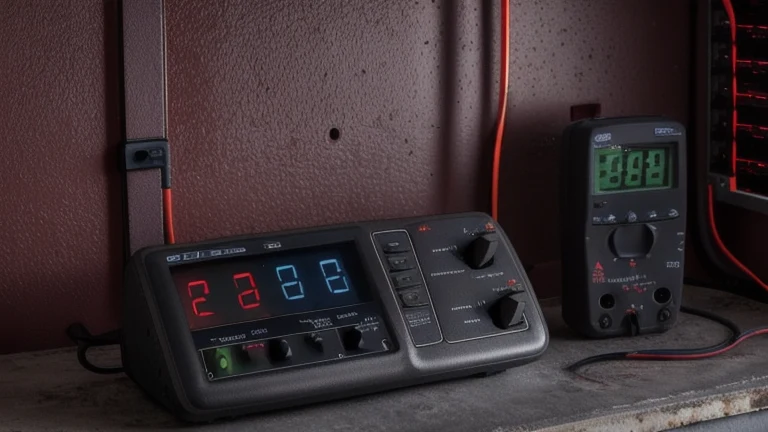
How to prove a circuit is dead: the live-dead-live test, CAT-rated meters, and the verification habit that prevents electrocution.
READ ARTICLE →
Cable pulling without damage and terminations that last: bend radius, strip length, lug selection, and torque to spec.
READ ARTICLE →
A safe EV charger install: service load calculation, dedicated GFCI circuit sizing, grounding, and commissioning.
READ ARTICLE →
Safe generator and transfer switch installation: preventing utility backfeed, sizing, neutral bonding, and load testing.
READ ARTICLE →
Industrial electrical maintenance: predictive thermal and vibration methods, preventive torque and contactor checks, and safe isolation.
READ ARTICLE →
How load centers and breakers distribute and protect power, main versus sub panels, and safe panel work.
READ ARTICLE →
Receptacle wiring, standard vs GFCI vs AFCI, correct terminations, and the errors that cause shocks and failures.
READ ARTICLE →
Single-pole, three-way, and four-way switch wiring, travelers and common terminals, and controlling multiple lights.
READ ARTICLE →
Contactors, overloads, and control circuits, start-stop stations, and the seal-in logic behind motor starters.
READ ARTICLE →
How VFDs vary motor speed by frequency, their energy savings and applications, and setup and troubleshooting basics.
READ ARTICLE →
Grounding versus bonding, how the equipment grounding conductor clears faults, and why it prevents shock and fire.
READ ARTICLE →
What the NEC is, how it is organized, the daily lookups like ampacity and box fill, and why compliance matters.
READ ARTICLE →
Systematic fault-finding with a multimeter, measuring voltage, continuity, and resistance, and divide-and-conquer logic.
READ ARTICLE →
How transformers change voltage with a turns ratio, primary and secondary windings, and why the grid depends on them.
READ ARTICLE →
Raceway versus cable tray, fill and support rules, and how proper routing protects industrial and commercial wiring.
READ ARTICLE →
Testing motor insulation resistance with a megohmmeter and windings with a multimeter to catch failure early.
READ ARTICLE →
What lineman school teaches, the climbing and high-voltage skills, and the apprenticeship path to journeyman.
READ ARTICLE →
What a power plant operator does, the control-room skills, and why trained emergency response defines the role.
READ ARTICLE →
What a low-voltage technician installs, why termination is craftsmanship, and why the trade is growing.
READ ARTICLE →
What a wind turbine technician does, why working at height defines the role, and the skills and safety involved.
READ ARTICLE →
What a PLC does, what training covers including ladder logic, and why fast troubleshooting makes the skill valuable.
READ ARTICLE →
What solar installer training covers, from PV systems to rooftop safety, and how NABCEP certification fits in.
READ ARTICLE →
What three-phase power is, how it differs from single-phase, and why industrial equipment depends on it.
READ ARTICLE →
What conduit bending involves, the common bends, and why it is equal parts math and hand skill.
READ ARTICLE →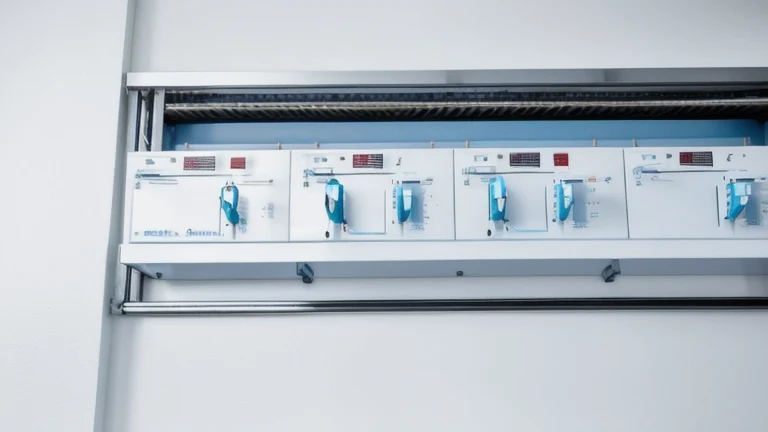
How electrician apprenticeships are structured, what apprentices learn, and how union and non-union paths compare.
READ ARTICLE →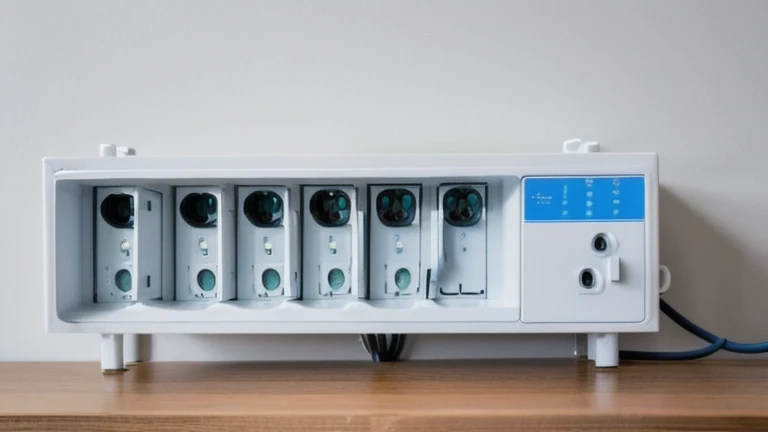
How residential circuits, grounding, and code protection work, and why safety fundamentals come before speed.
READ ARTICLE →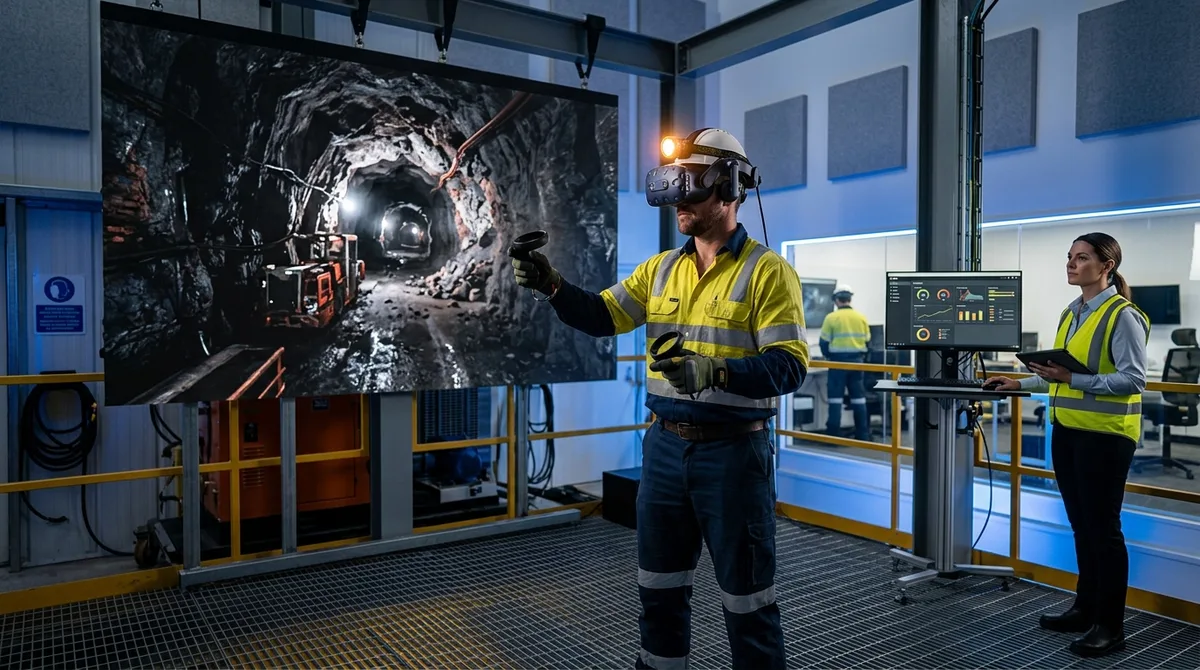
Mining safety VR training lets miners practice hazard recognition, emergency response, and equipment procedures in realistic simulations without real exposure.
READ ARTICLE →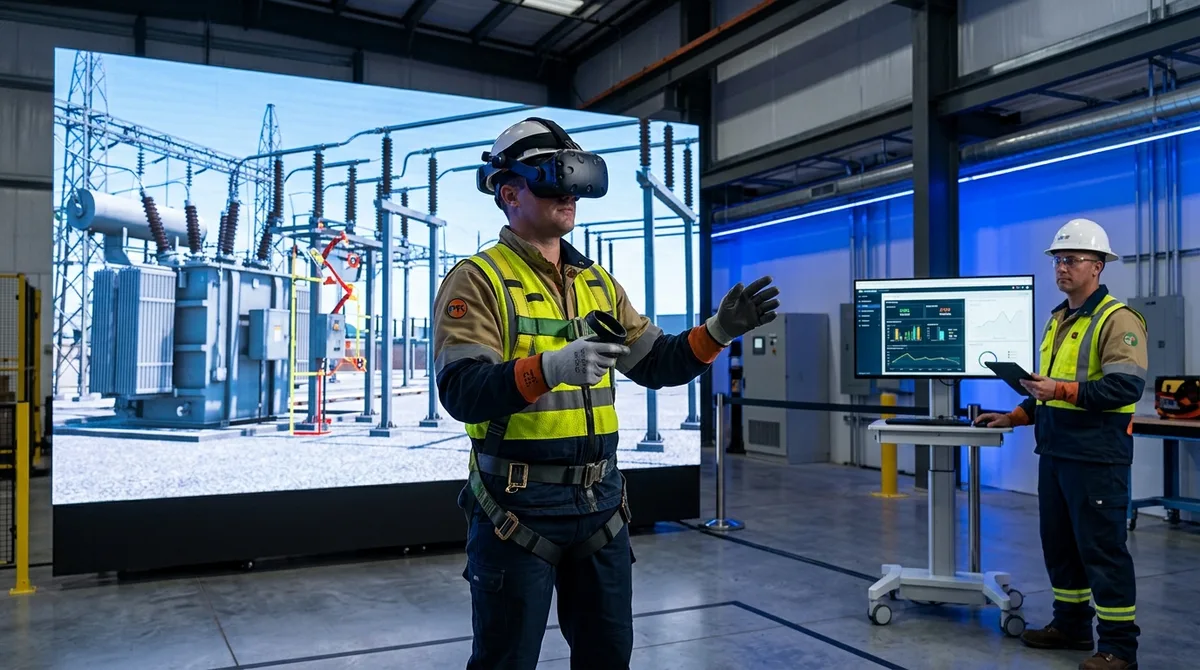
Utility VR training lets linemen practice high-voltage procedures, approach boundaries, and emergency response in realistic simulations without exposure to energized equipment.
READ ARTICLE →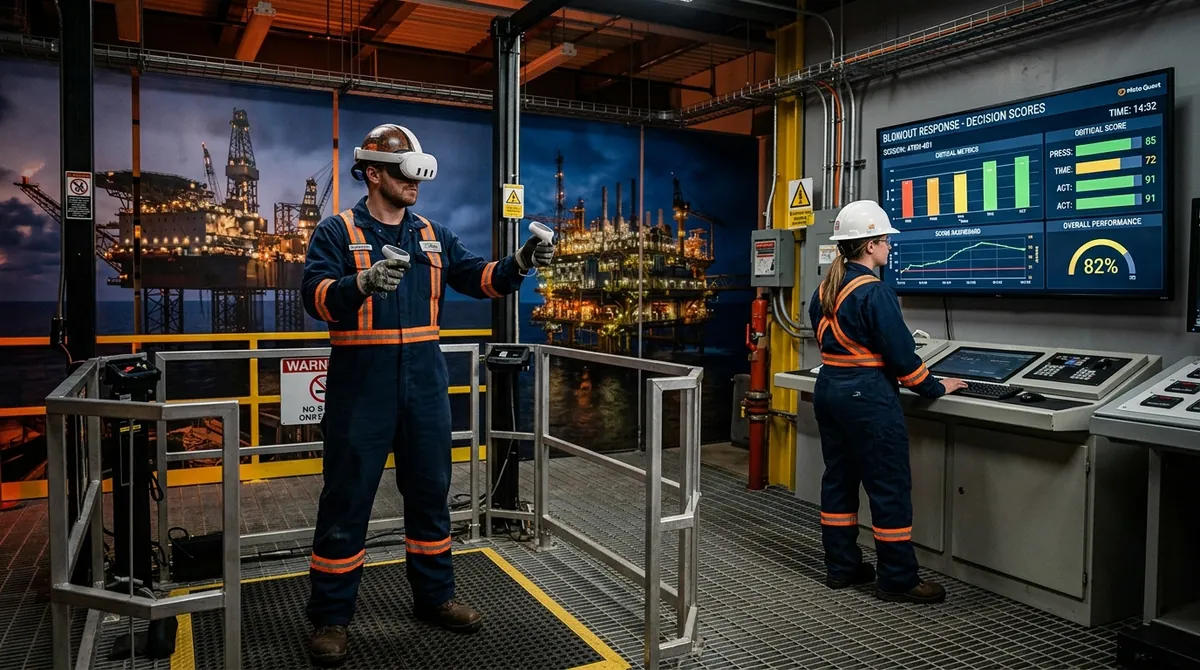
Oil and gas safety training covers scenarios that cannot be staged live. VR simulation builds crew response competency on blowout response, H2S exposure, and confined space emergencies without real-world risk.
READ ARTICLE →WE BUILD THIS IN VR — THE PRIME VR
Bring us your existing electrical & utilities program and we build it into immersive VR, so your team practices the real task and every attempt is scored and logged.
Book a discovery callBROWSE OTHER INDUSTRIES