
Same Training. Same Standards. Every Location, Every Hire.
Your training is only as consistent as your worst location. VR training programs deploy the same scenarios, standards, and evaluation to every site. No interpretation. No drift.
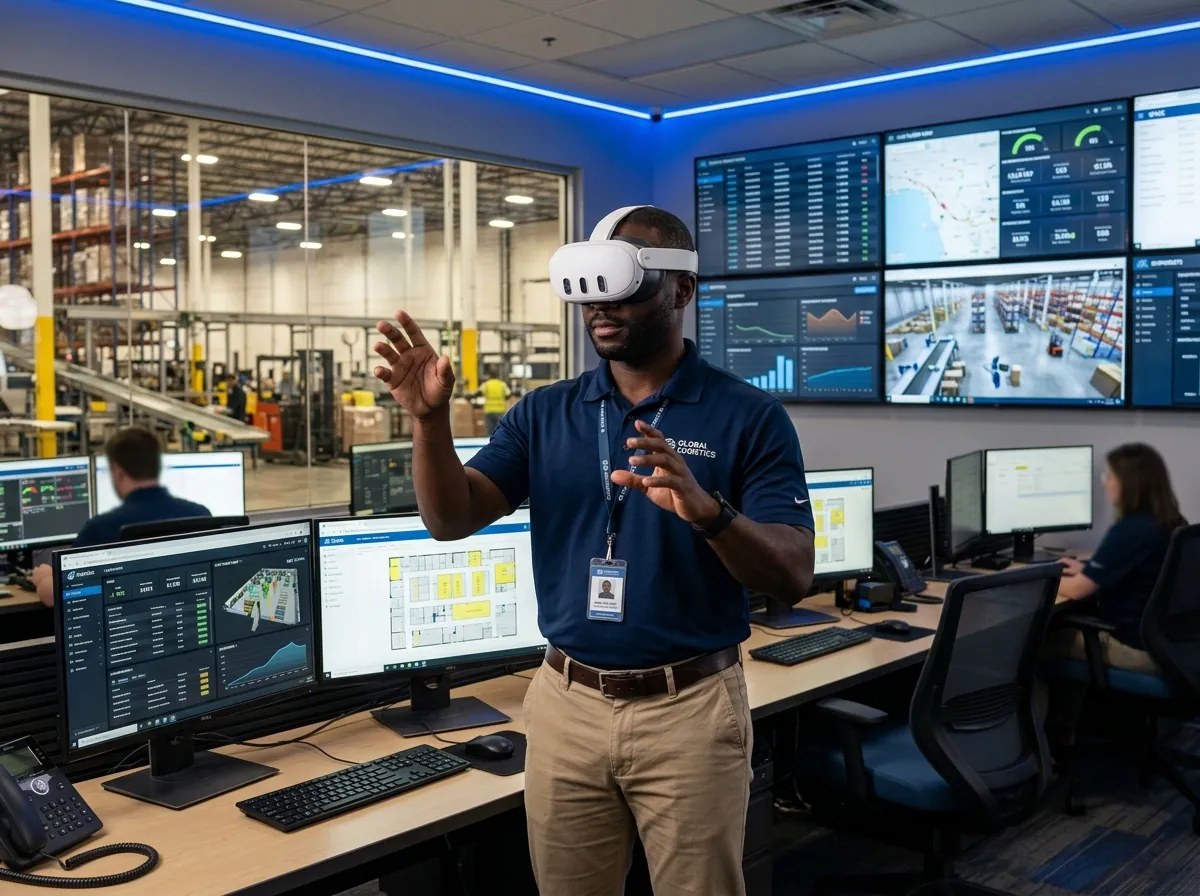
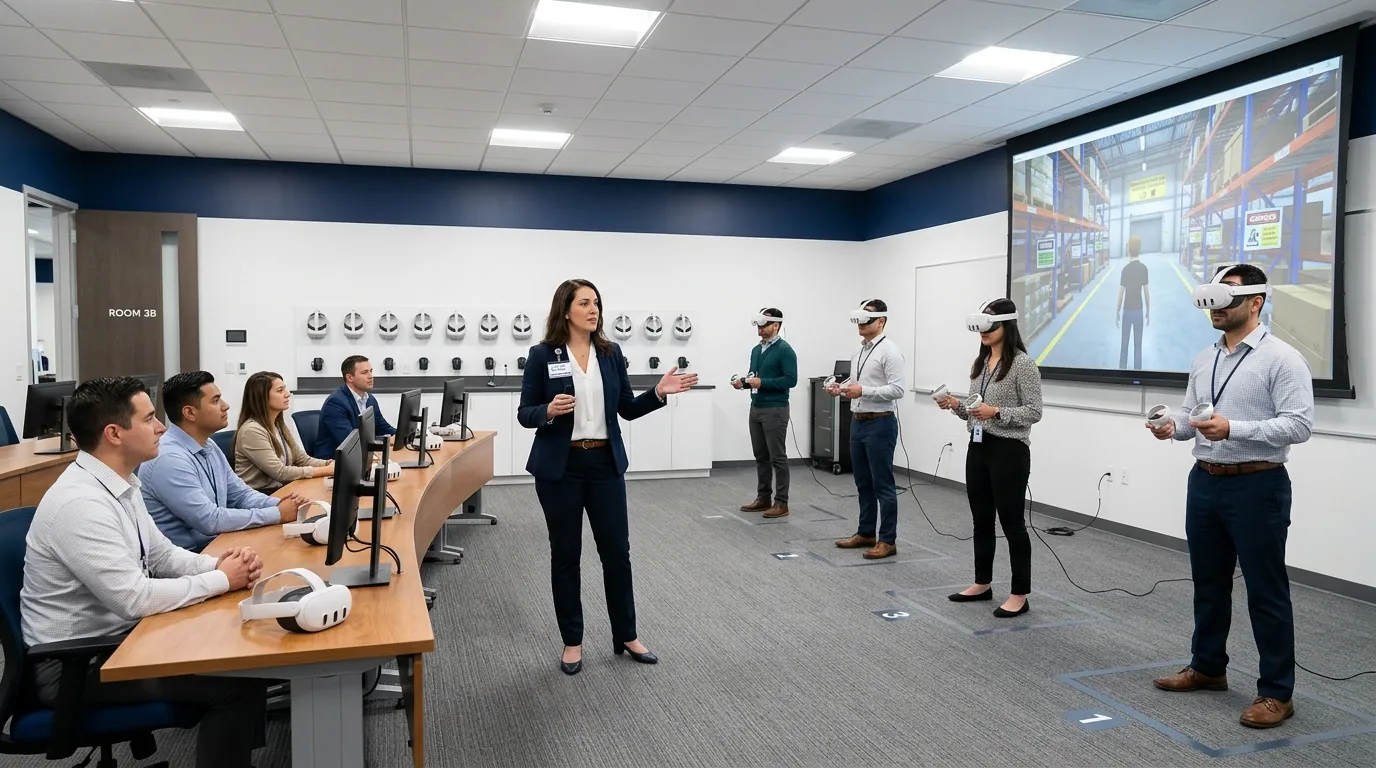
Your Training Works at One Location. What About the Other 47?
Training drift across locations
Every location interprets the same training materials differently. Local managers add their own shortcuts, skip sections, and introduce inconsistency. The same job title performs differently depending on where the employee was trained.
Training spend without measurable ROI
The enterprise spends hundreds of thousands annually on training programs that measure attendance, not performance. There is no data showing whether the investment changed behavior, reduced errors, or improved outcomes.
Onboarding delays at scale
New hires at distributed locations wait for trainers, wait for cohorts, or self-teach from manuals. Time-to-productivity stretches because the training infrastructure cannot keep pace with hiring.
Deploy Once. Train Identically. Measure Everything.
Identical scenarios at every site
Every employee at every location completes the same training scenarios with the same evaluation criteria. No manager interpretation. No regional variation. The training standard is enforced by the program itself.
Performance data, not completion data
Every session produces measurable performance data: how the employee responded, how many attempts were required, where errors occurred, and what skill gaps remain. Managers see who is ready and who needs more practice.
Scalable without trainer dependency
Adding a new location or a new cohort of hires does not require scheduling a trainer, booking travel, or assembling a classroom. The VR program is available immediately, on demand, at every site.
Centralized analytics and reporting
Training performance data from every location flows into a single dashboard. Compare sites, identify underperforming locations, track improvement over time, and export data to your existing HR or LMS systems.
What Enterprise Teams Practice in VR
Multi-site onboarding
New hires at any location complete the same Day 1 scenarios before touching a live environment. Consistent from site one to site fifty.
Compliance and safety training
Employees practice compliance scenarios that produce documented competence data. Not just a signature on a form, but proof of practiced performance.
Product and process knowledge
Complex product knowledge or operational processes are practiced in simulation rather than memorized from a manual. Employees demonstrate understanding, not recall.
Process standardization
When a process must be performed identically regardless of location, VR training ensures every employee practices the standard version. No shortcuts. No local interpretations.
Three Metrics That Justify the Investment
METRIC 1
Time-to-competence
How quickly new hires reach performance benchmarks compared to traditional training. Measured in days or weeks saved per new hire.
METRIC 2
Error and incident rates
Comparing trained vs. untrained cohorts on operational errors, safety incidents, or quality failures. Measured as percentage reduction post-training.
METRIC 3
Training cost per employee
Amortized VR program cost vs. alternatives: classroom training travel, trainer salaries, lost productivity during onboarding, or recurring refresher programs.
How Enterprise Programs Are Built
Every enterprise program starts with a discovery phase to identify your specific training scenarios, performance benchmarks, and deployment requirements. From there, we design, build, and deploy a program that fits your team, your systems, and your timeline.
See the full development processEnterprise Program Investment
Enterprise VR training programs range from a focused single-module deployment to a multi-site platform with full analytics and LMS integration.
Enterprise VR Training Questions
What makes VR better than LMS for enterprise training? +
LMS platforms measure who completed a module. VR training measures how each employee performed within a scenario. LMS is effective for information delivery. VR is effective when employees must practice a response, make a decision under pressure, or demonstrate competence. The two systems complement each other, with VR providing the practice layer that LMS cannot.
How long does it take to develop an enterprise VR training program? +
Development timelines range from 12 to 28 weeks depending on the number of scenarios, level of interactivity, and deployment complexity. A single-module foundational program can be deployed in 12-16 weeks. Multi-module enterprise deployments with LMS integration and analytics typically require 20-28 weeks.
Can VR training integrate with our existing HR or LMS systems? +
Yes. VR training programs can export performance data via xAPI (Tin Can), SCORM, or direct API integration to your existing LMS, HRIS, or learning record store. Integration scope is defined during the discovery phase based on your current systems and data requirements.
How do you measure training ROI with VR? +
ROI is measured through three primary metrics: reduced time-to-competence (how quickly new hires reach performance benchmarks), reduced error or incident rates (comparing trained vs. untrained cohorts), and training cost per employee (comparing VR program amortized cost against alternatives like classroom training, travel, or lost productivity).
What is the minimum company size or team size for enterprise VR training? +
Enterprise VR training programs typically make economic sense for organizations with 50 or more employees who need to complete the same training scenarios. Smaller teams may benefit from a focused single-scenario program. The discovery call helps determine whether the investment matches your scale.
How does VR training scale across multiple locations? +
VR training programs are deployed as software on standard enterprise VR headsets. Once a program is built, it can be deployed to any number of locations simultaneously. Every location receives identical training content, identical evaluation criteria, and centralized performance reporting regardless of who manages training locally.
Tell us the training problem you need to solve.
We will tell you honestly whether VR is the right solution for your enterprise.