
The Difference Between Your Top Rep and Your Average Rep Is Practice
Your top performer closes 5x more than your average rep. The difference is practice. VR sales training creates realistic customer conversations your team can repeat until the right response is automatic.
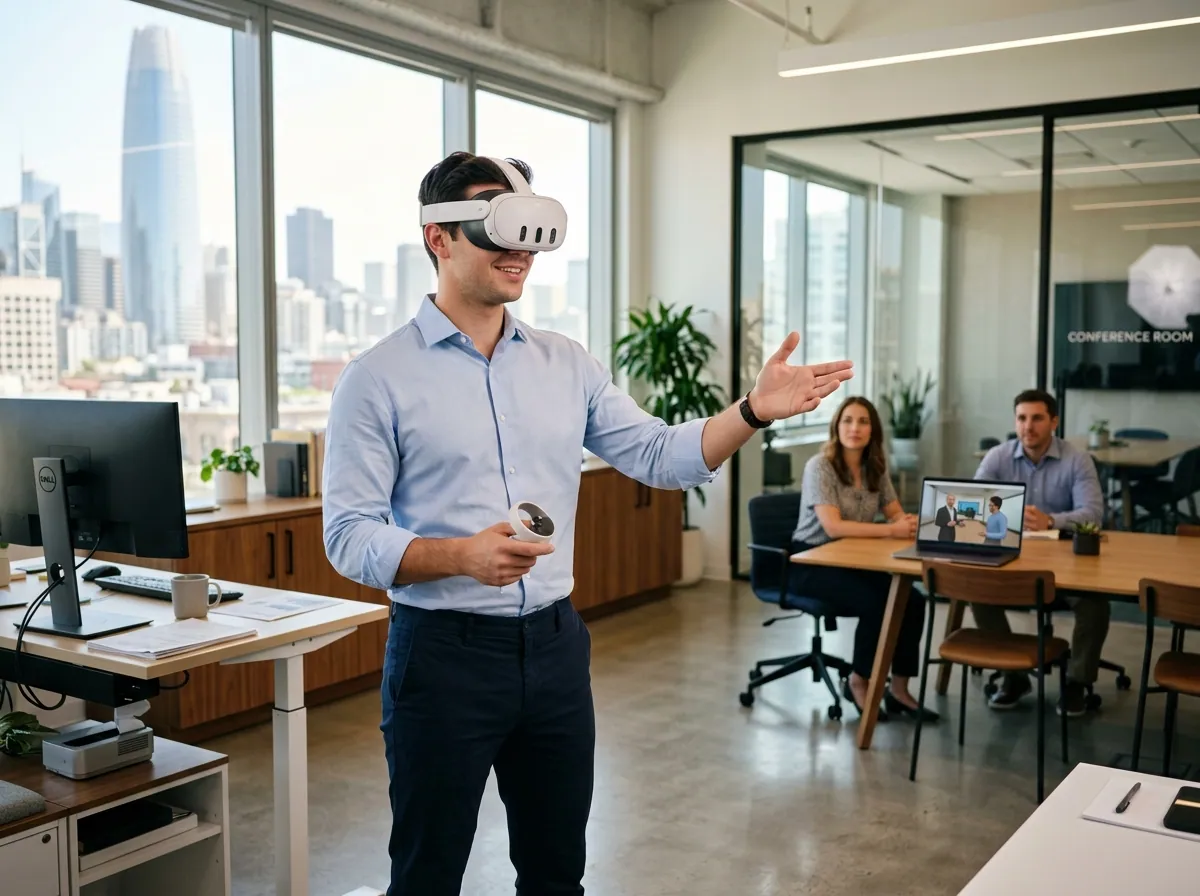
Information Is Not Practice. Your Reps Need Repetitions.
Awkward classroom role-plays
Peer role-plays are inconsistent, uncomfortable, and rarely push reps past their comfort zone. Reps perform for the coach, not for the customer. The practice does not simulate real pressure.
Ride-along dependency
New hires shadow top performers for weeks or months. The top performer's time is consumed. The new hire observes but does not practice. When they finally face a customer alone, they are unprepared.
9-12 month ramp time
New sales hires take three quarters or more to reach full productivity. The company pays full salary for months while the rep learns through trial and error on real prospects with real revenue at stake.
Structured Practice That Builds Selling Skills
Repeatable customer scenarios
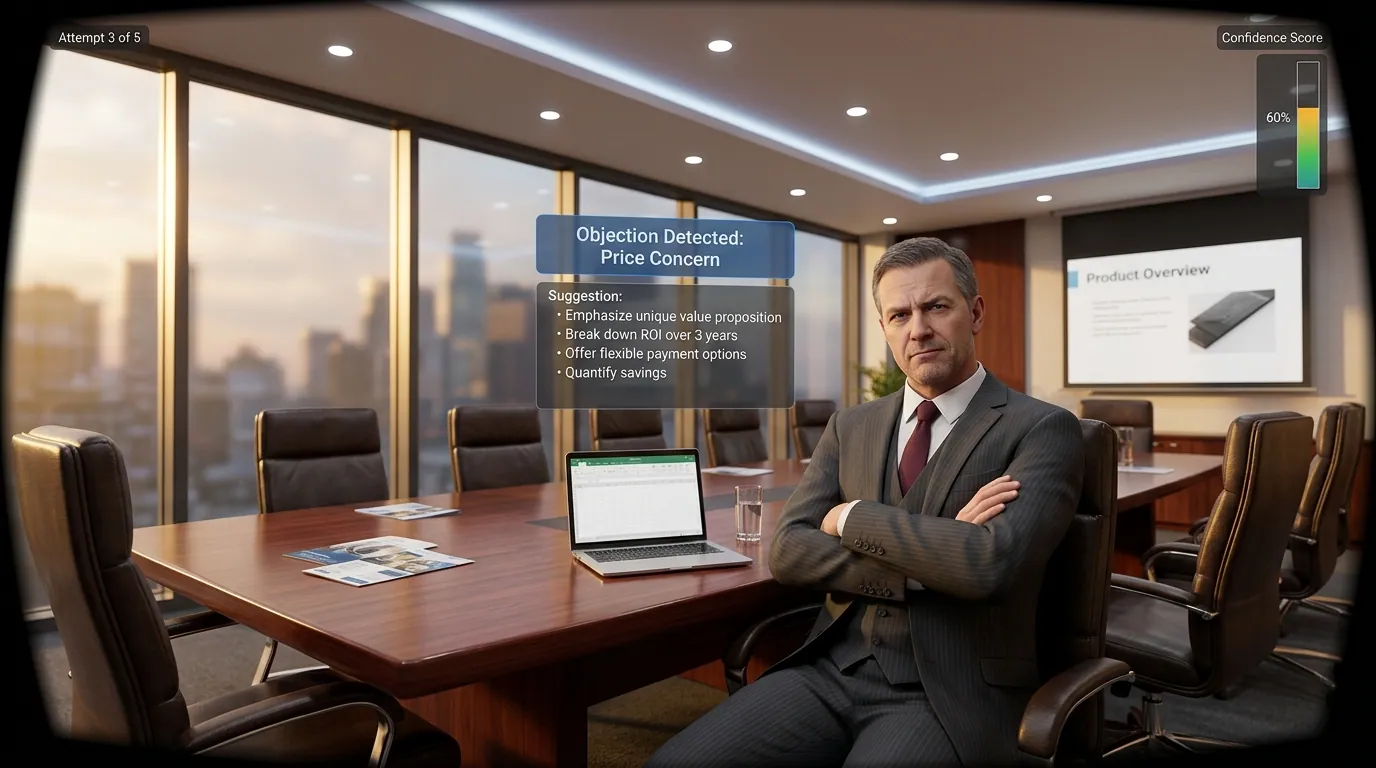
Reps practice discovery calls, objection handling, product demos, and closing conversations as many times as needed. The scenario responds to their choices, creating realistic conversational pressure.
Private, pressure-free practice
Reps practice alone, without peer judgment or coach pressure. They can fail, retry, and improve without embarrassment. The best performers are often the ones who practiced the most.
Per-rep performance data
Every session generates data: which scenarios the rep completed, how they handled objections, where they hesitated, and what gaps exist. Sales managers see exactly who needs coaching and on what.
Faster ramp to productivity
New hires complete dozens of practice conversations before their first real call. They enter customer conversations with repetitions already logged instead of learning through expensive trial and error.
What Your Team Will Practice
Discovery conversations
Objection handling
Product demonstrations
Negotiation and pricing discussions
Multi-stakeholder presentations
Closing techniques
Scenarios are built from your actual selling situations: your product, your buyer personas, your common objections.
Sales Training Program Investment
Programs range from a focused single-scenario module to a comprehensive multi-scenario platform covering the full sales cycle.
VR Sales Training Questions
How does VR sales training work? +
VR sales training places reps in simulated customer conversations where they practice discovery questions, objection responses, product demonstrations, and closing techniques. Each conversation follows a branching script that responds to the rep's choices, creating realistic pressure without real consequences. Sessions generate performance data showing how the rep handled each stage.
What sales scenarios can be built in VR? +
Any customer-facing conversation can be built as a VR training scenario. Common applications include initial discovery calls, objection handling (price, timing, competitor comparison), product demonstrations, negotiation and closing, and complex multi-stakeholder sales conversations. Scenarios are built from your actual selling situations.
How does VR sales training compare to role-play or coaching? +
Classroom role-plays depend on a coach being available and willing to give honest feedback. VR sales training is available on demand, consistent every time, and private. Reps can repeat difficult scenarios without embarrassment. Performance data shows exactly where each rep struggles, allowing targeted coaching.
Can VR sales training reduce new hire ramp time? +
VR sales training compresses the practice phase of onboarding. Instead of learning through trial and error on real prospects over 9-12 months, new hires complete dozens of practice conversations before their first real customer call. Teams using structured practice-based training typically see measurable improvements in ramp time.
How do we measure the ROI of VR sales training? +
ROI is measured through reduced ramp time for new hires, improved close rates, higher average deal size, and reduced dependence on ride-along training. The VR platform provides per-rep performance data that can be correlated with actual sales outcomes over time.
What team size is needed to justify a VR sales training investment? +
VR sales training typically makes economic sense for teams of 20 or more reps, or teams with high turnover that require continuous onboarding. Smaller teams may benefit from a focused single-scenario program. The discovery call helps determine whether VR is the right investment for your team size.
Tell us the conversation your reps need to practice.
We will tell you honestly whether VR is the right approach for your sales team.