
VR Workplace Safety Training: Why EHS Leaders Are Replacing Video with Simulation
Workplace injuries cost U.S. businesses $171 billion annually. Most of those injuries happen to workers who completed their required safety training. The problem is not that they skipped the training, it is that the training they completed did not build the response patterns needed in the moment. VR changes that.
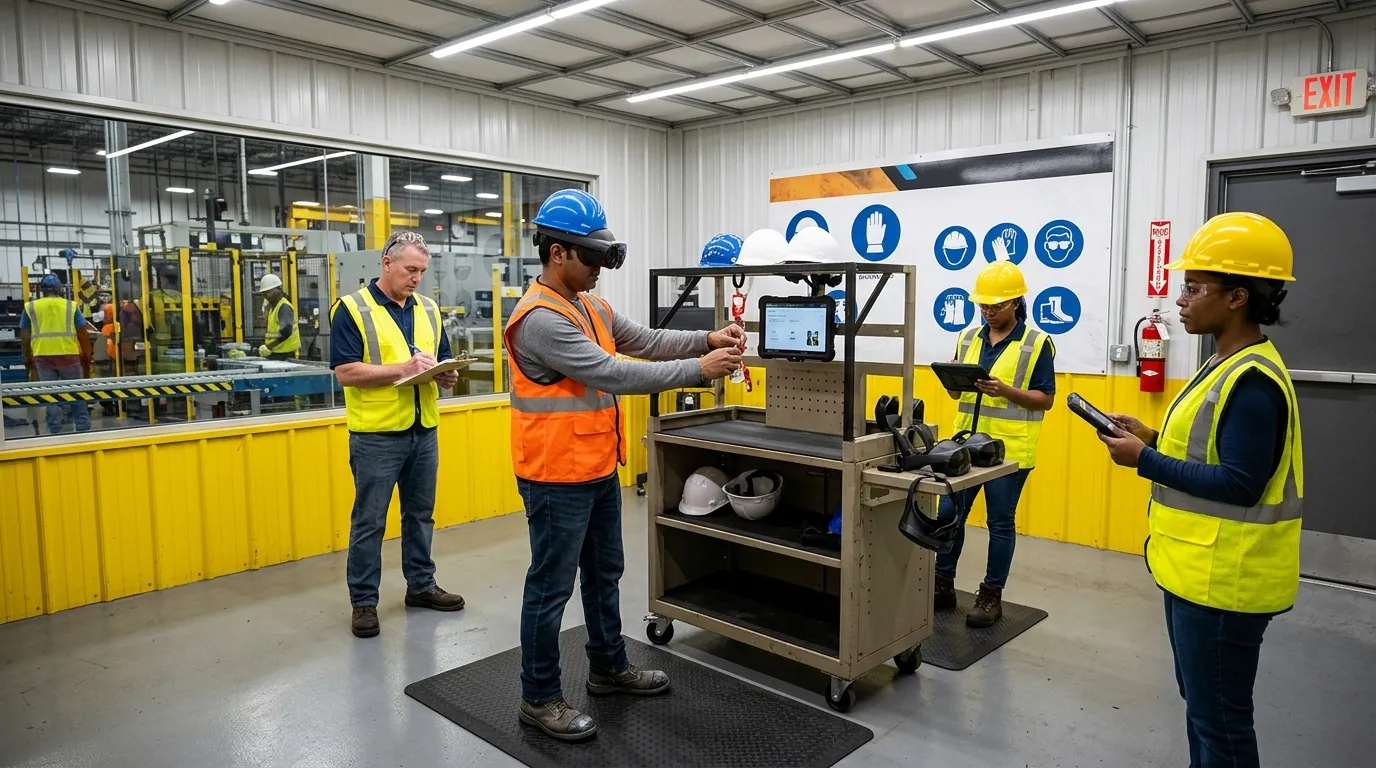
QUICK ANSWER
VR workplace safety training replaces passive video compliance with active simulation, placing workers inside the exact hazard scenarios where injuries occur and measuring how they respond. Programs connect to LMS platforms via xAPI or SCORM for OSHA documentation. The National Safety Council reports workplace injuries cost $171 billion annually in the U.S.; PwC research shows VR-trained workers are 275% more confident applying safety skills compared to classroom-trained peers. Custom programs typically range from $30,000 to $200,000 depending on industry, hazard complexity, and deployment scale.
The Problem with How Most Safety Training Works
Annual safety training typically works like this: workers watch a video, complete a quiz, sign a form. The checkbox is satisfied. The actual safety behavior may or may not change. When an incident happens six months later, the investigation often reveals that the injured worker completed their required training. They just did not have the practiced response pattern that would have prevented the injury.
Video training transfers information. It does not transfer behavior. Watching someone else respond to a chemical spill, a fall hazard, or a confined space emergency is not the same as making those decisions yourself under simulated stress. VR safety training vs. video-based training shows this gap clearly in the outcome data.
$171B
Workplace injuries cost U.S. businesses $171 billion per year, more than the combined revenue of most Fortune 500 companies (National Safety Council, 2023)
What VR Workplace Safety Training Covers
Effective VR safety training programs are built around the specific hazard profiles of each operation. A chemical manufacturing facility has different priority scenarios than a distribution warehouse or a commercial construction site. Custom programs map to your actual incident history, your OSHA recordable categories, and the specific equipment and environments where your workers operate.
Common scenario categories across industries include:
| Industry | Top VR Safety Scenarios | OSHA Standards Addressed |
|---|---|---|
| Manufacturing | Lockout/tagout, machine guarding, chemical exposure | 1910.147, 1910.212, 1910.1200 |
| Construction | Fall protection, scaffolding, electrical safety | 1926.502, 1926.451, 1926.403 |
| Logistics / Warehouse | Forklift operation, ergonomics, emergency egress | 1910.178, 1910.38 |
| Healthcare | Bloodborne pathogens, patient handling, fire response | 1910.1030, 1910.157 |
| Oil and Gas | H2S exposure, confined space, blowout response | 1910.146, 1910.119 |
How VR Builds Actual Safety Behavior
The mechanism through which VR produces better safety outcomes is not novelty, it is practiced decision-making under realistic conditions. When a worker practices the correct lockout/tagout sequence in VR 10 times before they ever approach the actual equipment, their procedural memory for that sequence is established. When they encounter a variation, a different machine layout, an unexpected second energy source, they have a practiced framework to draw from.
According to PwC's 2020 VR Soft Skills Study, VR-trained learners are 3.75x more emotionally connected to the training content compared to classroom learners. In safety training, emotional engagement matters: a worker who has experienced the simulated consequences of a safety failure is more likely to follow protocol when the real situation presents itself.
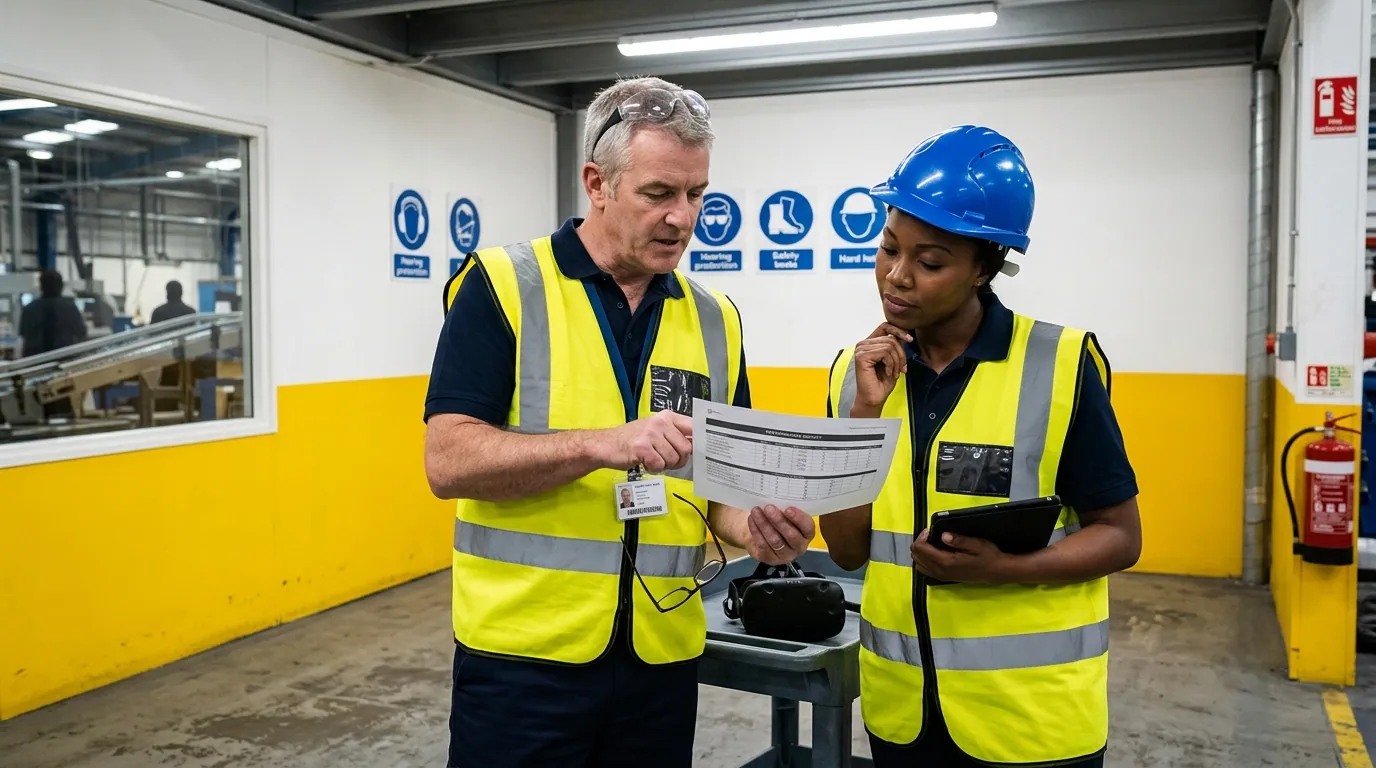
What We See in VR Workplace Safety Training Projects
In workplace safety VR programs we develop, several consistent patterns shape outcomes:
- Incident history is the best scenario brief. The most effective safety scenarios come directly from your own incident and near-miss reports, not generic industry examples. A scenario built around your actual recordable incidents produces workers who are trained for your specific failure modes, not a composite average.
- Multilingual deployment is not optional in most industries. Manufacturing, construction, and logistics workforces are often multilingual. VR programs that deliver the same scenario in Spanish, English, and other languages without requiring bilingual trainers dramatically improve training reach and compliance documentation completeness.
- The first scenario always reveals the gap. In almost every safety VR deployment, the performance data from the first scenario session reveals that a significant portion of the workforce cannot complete the correct procedure sequence without prompts. This is not a reflection of worker capability, it reflects that prior training never required them to demonstrate the sequence.
- Near-miss scenarios outperform injury scenarios for behavior change. Scenarios where the worker makes an error and witnesses the near-miss consequence, without the severity of an actual injury, produce stronger behavior change than scenarios where the correct path leads to a positive outcome. Consequence exposure is the mechanism.
275%
VR-trained workers are 275% more confident applying skills on the job versus classroom-trained peers, including safety procedures under real workplace conditions (PwC, 2020)
Frequently Asked Questions
Does VR workplace safety training meet OSHA compliance requirements? +
Yes, when designed correctly. Custom VR safety training programs built with xAPI or SCORM integration log every completion, scenario decision, and competency score to your LMS. This creates OSHA-compliant documentation for required training (hazard communication, lockout/tagout, PPE, emergency response). VR does not replace required hands-on demonstrations for specific standards, but it handles the knowledge and decision-making layers that precede competency sign-off.
What safety scenarios work best in VR? +
High-consequence, low-frequency scenarios produce the strongest training outcomes in VR: chemical spill response, fall arrest activation, confined space entry, electrical hazard recognition, active shooter response, and equipment failure procedures. These are the scenarios where video training fails, employees have watched the video but never practiced the decision sequence under simulated pressure. VR closes that gap.
How does VR safety training reduce workplace incident rates? +
VR safety training reduces incidents by building procedural memory before hazard exposure. Workers who have practiced the correct response to a specific hazard in VR respond faster and more accurately when they encounter it on the floor, because the VR scenario activated the same stress response and decision sequence as the real event. According to PwC, VR-trained learners are 275% more confident applying skills on the job versus classroom-trained peers.
Can VR safety training work for deskless and field workers? +
Yes. Standalone VR headsets like the Meta Quest 3 do not require a connected PC or fixed training room. Field workers can complete VR safety scenarios in a break room, a job trailer, or a dedicated safety bay. Multi-language support allows the same scenario to reach a multilingual workforce without requiring bilingual trainers. For large workforces spread across multiple sites, VR is often the only way to achieve consistent safety training at scale.
Ready to build safety training around your actual incident data?
Tell us your industry, your top recordable categories, and your workforce size. We will design a program around your specific hazard profile.