
Electrical Risk VR Training for Australian Workplaces (Model Code: Managing Electrical Risks in the Workplace)
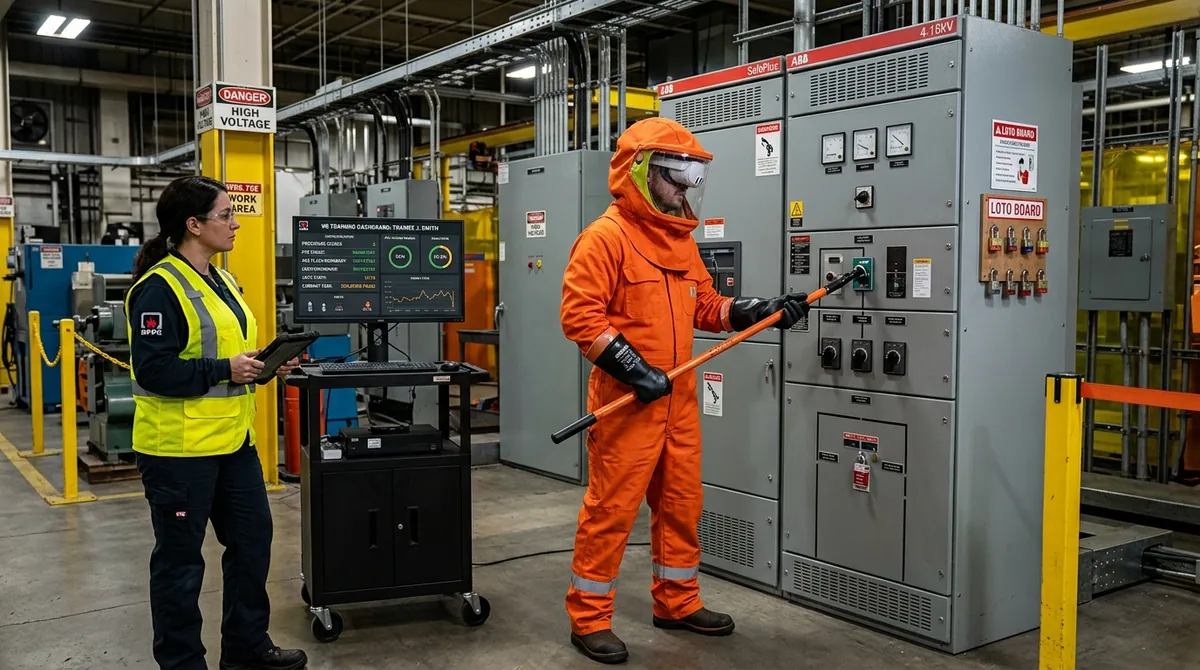
VR electrical scenario on the Safe Work Australia model Code: de-energised work by default, isolation and testing, and energised work only when allowed.
QUICK ANSWER
The Safe Work Australia model Code of Practice on managing electrical risks explains that electrical work should be done de-energised, after isolation and testing, and that energised work is only allowed in limited circumstances with a risk assessment and controls. A VR switchboard lets workers practise isolation and testing in order.
What the Rule Requires
Model Code of Practice: Managing electrical risks in the workplace (Safe Work Australia): under the model WHS Regulations electrical work on energised equipment is prohibited except in limited circumstances, so equipment must be isolated and tested to confirm it is de-energised before work starts. The Code also covers inspecting and testing electrical equipment, using residual current devices and keeping unlicensed people away from electrical work.
The scenario is a warehouse refurbishment in Melbourne's west. An electrician must replace a circuit breaker in a distribution board that feeds the office and a cold room. The cold room tenant asks to keep it running, and a second supply from a generator was added last year.
Hazards in This Scenario
- Working on circuits thought to be dead
- A second supply feeding the board
- Pressure to work energised
- Damaged leads and missing RCDs on site
The Procedure the Scenario Rehearses
- Identify all supplies to the board
- Isolate and lock out each supply
- Test for dead with a proven tester
- Refuse energised work unless the conditions are met
- Check leads and RCD protection before use
- Keep others away from open boards
Mistakes the Scenario Is Built to Catch
- Agreeing to work live for convenience
- Missing the generator supply
- Testing without proving the tester
- Using a damaged extension lead
Competence Assessment Matrix
| Decision point | What the assessor sees | Pass standard |
|---|---|---|
| Sources | All supplies found | Including generator |
| Isolation | Each supply | Locked out |
| Testing | Prove, test, prove | Done |
| Pressure | Live work request | Declined unless permitted |
What VR Covers
- Hidden supplies that must be found
- Pressure from a client in the scene
- Shock and arc consequences without injury
- Step records per worker
What VR Does Not Replace
- Licensed electrical work
- Site electrical inspection and testing
- Supervisor verification
Scope of a One-Scenario Pilot
A pilot builds this scenario as a single module, in Unity or Unreal Engine depending on the visual fidelity the task needs and the headsets on site. It runs on standalone headsets, logs every learner decision, and exports a per-person record for your training file. It is measured against your current method with a test cohort before anything is scaled.
Frequently Asked Questions
Is live electrical work allowed in Australia?
Only in limited circumstances under the model WHS Regulations. The default is to isolate and test before work.
Does VR replace licensing?
No. Electrical work needs the right licence. VR builds safe habits.
Why include client pressure?
Requests to keep power on are a common reason for unsafe live work.
Want this scenario built around your site?
We review your current procedure and tell you which parts can be rehearsed in VR and which still need hands-on practice.
Map Your Highest-Risk ScenarioFurther reading
- Falls Prevention VR Training for Australian Construction (Model Code: Managing the Risk of Falls)
- Hazardous Manual Tasks VR Training for Australian Workplaces (Model Code of Practice)
- Excavation VR Training for Australian Construction (Model Code of Practice: Excavation Work)
- Arc flash electrical safety VR training
- Industrial electrical maintenance guide
- All VR training scenarios: Australia
- VR pilot readiness checklist
- How VR training programs are priced