
LPG Forklift Cylinder Change VR Training (DSEAR 2002)
VR scenario on changing LPG forklift cylinders under DSEAR 2002: ignition sources, the cylinder cage, PPE, leak checks and what to do after a leak.
QUICK ANSWER
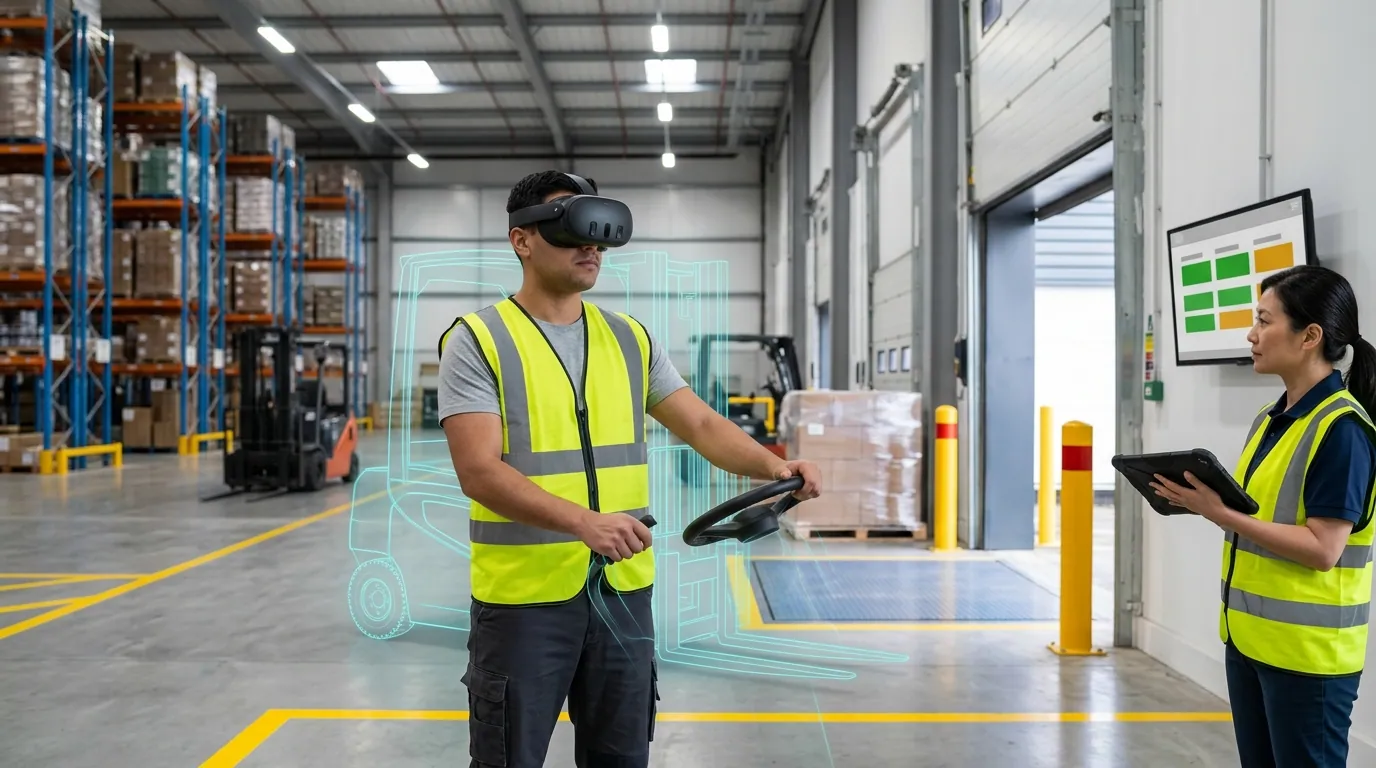
DSEAR 2002 requires employers to assess and control the risks from dangerous substances such as LPG, which is heavier than air and can collect in low areas. Changing a forklift cylinder is a frequent, routine task where mistakes happen. A VR scenario trains the change step by step.
What the Rule Requires
Dangerous Substances and Explosive Atmospheres Regulations 2002 (SI 2002/2776): employers must assess the risks from dangerous substances (regulation 5), eliminate or reduce those risks so far as is reasonably practicable (regulation 6), and provide information, instruction and training to employees (regulation 9). LPG is a dangerous substance that is heavier than air and can collect in drains and pits.
The scenario is a change at the cylinder cage at night. The truck is parked near a drain, the operator has no gloves, the new cylinder has a damaged valve guard and there is a hiss after connection.
Hazards in This Scenario
- Fire or explosion from leaking LPG
- Cold burns from liquid LPG
- Gas collecting in drains or pits
- Damaged cylinders
The Procedure the Scenario Rehearses
- Park away from drains and ignition sources
- Turn off the engine and close the valve
- Wear gloves and eye protection
- Inspect the new cylinder and its seal
- Connect, open slowly and check for leaks
- Stop and isolate if a leak is found
Mistakes the Scenario Is Built to Catch
- Changing near a drain
- No gloves
- Using a damaged cylinder
- Ignoring a hiss
Competence Assessment Matrix
| Decision point | What the assessor sees | Pass standard |
|---|---|---|
| Position | Truck location | Away from drains |
| PPE | Gloves and eye protection | Worn |
| Cylinder | Damage found | Rejected |
| Leak | Response | Isolates and reports |
What VR Covers
- Leak response without gas
- Step order practice
- Hidden cylinder defects
- Records per operator
What VR Does Not Replace
- Supplier training
- Storage cage design
- Fire emergency procedures
Scope of a One-Scenario Pilot
A pilot builds this scenario as a single module, in Unity or Unreal Engine depending on the visual fidelity the task needs and the headsets on site. It runs on standalone headsets, logs every learner decision, and exports a per-person record for your training file. It is measured against your current method with a test cohort before anything is scaled.
Frequently Asked Questions
Why is LPG dangerous near drains?
LPG is heavier than air and can collect in low places where it may ignite.
Is training required for cylinder changes?
Yes. DSEAR requires information, instruction and training on dangerous substances.
Can VR replace supplier training?
No. It adds repeat practice of the change procedure. Gas supplier and employer instruction still apply.
Want this scenario built around your site?
We review your current procedure and tell you which parts can be rehearsed in VR and which still need hands-on practice.
Map Your Highest-Risk ScenarioFurther reading
- Forklift Operator VR Training: Basic, Specific Job and Familiarisation Training (HSE L117 and PUWER)
- Warehouse Pedestrian Segregation VR Training (Workplace Regulations 1992, Regulation 17)
- Forklift Pre-Use Check VR Training for UK Operators (PUWER 1998 and LOLER 1998)
- Loading Bay VR Training: Vehicle Creep, Drive-Aways and Trailer Restraints (Workplace Transport, HSG136)
- Forklift training simulator
- All VR training scenarios: United Kingdom
- VR pilot readiness checklist
- How VR training programs are priced