
Forklift Operator VR Training: Basic, Specific Job and Familiarisation Training (HSE L117 and PUWER)
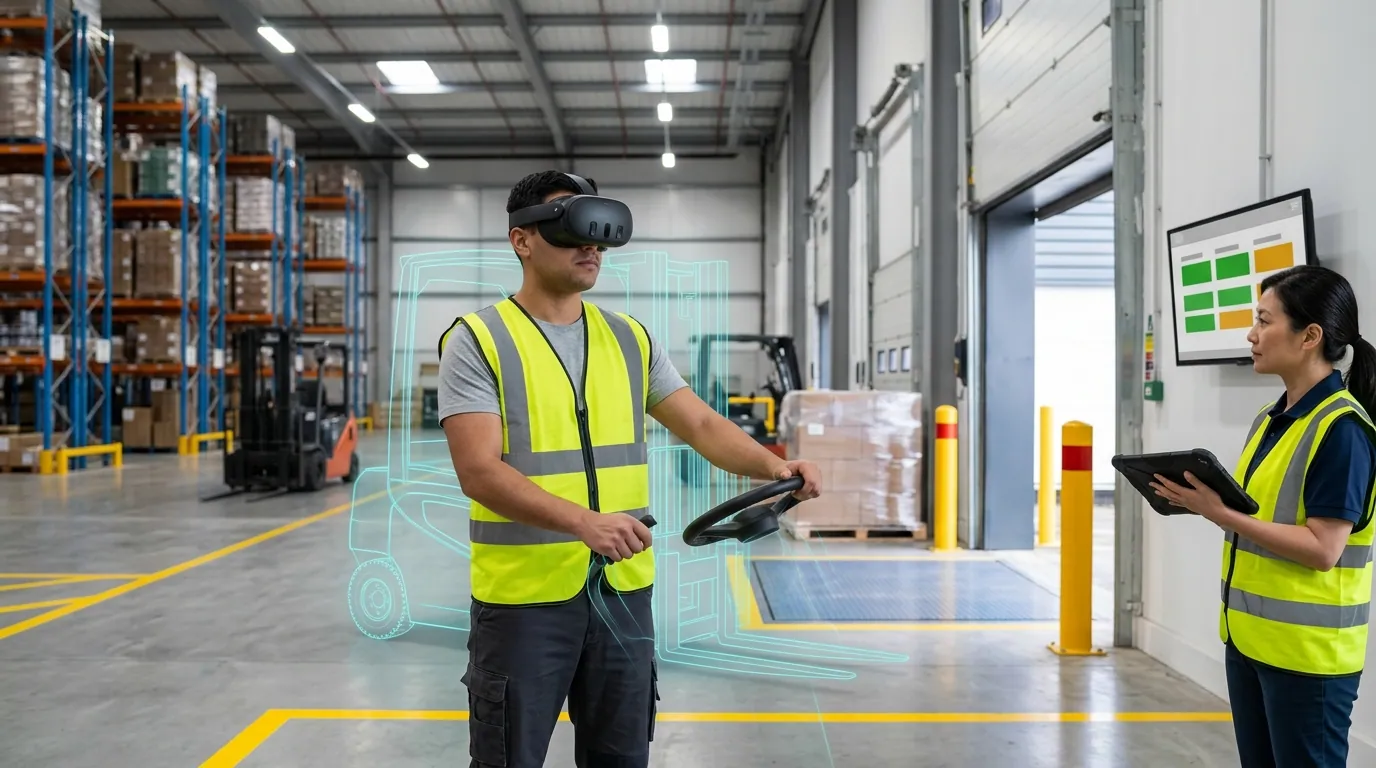
VR forklift training scenario on HSE Approved Code of Practice L117 and PUWER regulation 9: basic training, specific job training, familiarisation and written authorisation.
QUICK ANSWER
HSE Approved Code of Practice L117 sets three stages of training for rider-operated lift truck operators: basic training, specific job training and familiarisation, followed by written authorisation from the employer. PUWER regulation 9 makes training a legal duty. VR fits the specific job stage, where operators learn your site before driving it.
What the Rule Requires
HSE L117, Rider-operated lift trucks: operator training and safe use (ACOP and guidance), with PUWER 1998 regulation 9: L117 says operator training should include basic training, specific job training and familiarisation training, and that employers should give operators written authorisation to operate. PUWER regulation 9 requires employers to ensure that all persons who use work equipment have received adequate training for health and safety purposes.
The scenario follows a new operator who has a basic training certificate but has never worked in this distribution centre. The site has a mezzanine with a pallet gate, narrow aisles with high racking, a ramp to a goods-in yard and a shift change with heavy pedestrian traffic.
Hazards in This Scenario
- Operators with basic skills but no site knowledge
- Site-specific hazards such as ramps and gates
- Pedestrian peaks at shift change
- Unauthorised drivers
The Procedure the Scenario Rehearses
- Confirm basic training before site training
- Learn site routes, speed limits and one-way systems
- Practise the site-specific tasks: mezzanine, racking, ramp
- Familiarise under supervision
- Get written authorisation before working alone
- Refresh training when tasks or trucks change
Mistakes the Scenario Is Built to Catch
- Starting work without familiarisation
- Using routes not in the plan
- Speeding at shift change
- Driving without authorisation
Competence Assessment Matrix
| Decision point | What the assessor sees | Pass standard |
|---|---|---|
| Routes | Site rules followed | Followed |
| Tasks | Mezzanine and ramp | Done safely |
| Pedestrians | Shift change behaviour | Slows and gives way |
| Authorisation | Status | Knows they need it |
What VR Covers
- Specific job training on a digital copy of your site
- Consistent assessment
- Practice of rare tasks
- Records per operator
What VR Does Not Replace
- Basic training on a real truck by an accredited provider
- Familiarisation under supervision
- The employer authorisation
Scope of a One-Scenario Pilot
A pilot builds this scenario as a single module, in Unity or Unreal Engine depending on the visual fidelity the task needs and the headsets on site. It runs on standalone headsets, logs every learner decision, and exports a per-person record for your training file. It is measured against your current method with a test cohort before anything is scaled.
Frequently Asked Questions
What are the three stages of forklift training in the UK?
Basic training, specific job training and familiarisation, as set out in HSE L117.
Do forklift licences exist in the UK?
No. There is a training certificate and the employer gives written authorisation.
Can VR deliver basic training?
Basic training needs a real truck. VR supports specific job training and refreshers.
Want this scenario built around your site?
We review your current procedure and tell you which parts can be rehearsed in VR and which still need hands-on practice.
Map Your Highest-Risk ScenarioFurther reading
- Warehouse Pedestrian Segregation VR Training (Workplace Regulations 1992, Regulation 17)
- Forklift Pre-Use Check VR Training for UK Operators (PUWER 1998 and LOLER 1998)
- Loading Bay VR Training: Vehicle Creep, Drive-Aways and Trailer Restraints (Workplace Transport, HSG136)
- Pallet Racking Damage Inspection VR Training (HSE HSG76 and Management Regulations)
- Forklift training simulator
- Best forklift training programs
- All VR training scenarios: United Kingdom
- VR pilot readiness checklist
- How VR training programs are priced