
Heavy Equipment Simulator Training With VR
Heavy equipment is expensive to run, dangerous to learn on, and unforgiving of mistakes. VR simulator training lets operators build real skill before they ever start the engine.
QUICK ANSWER
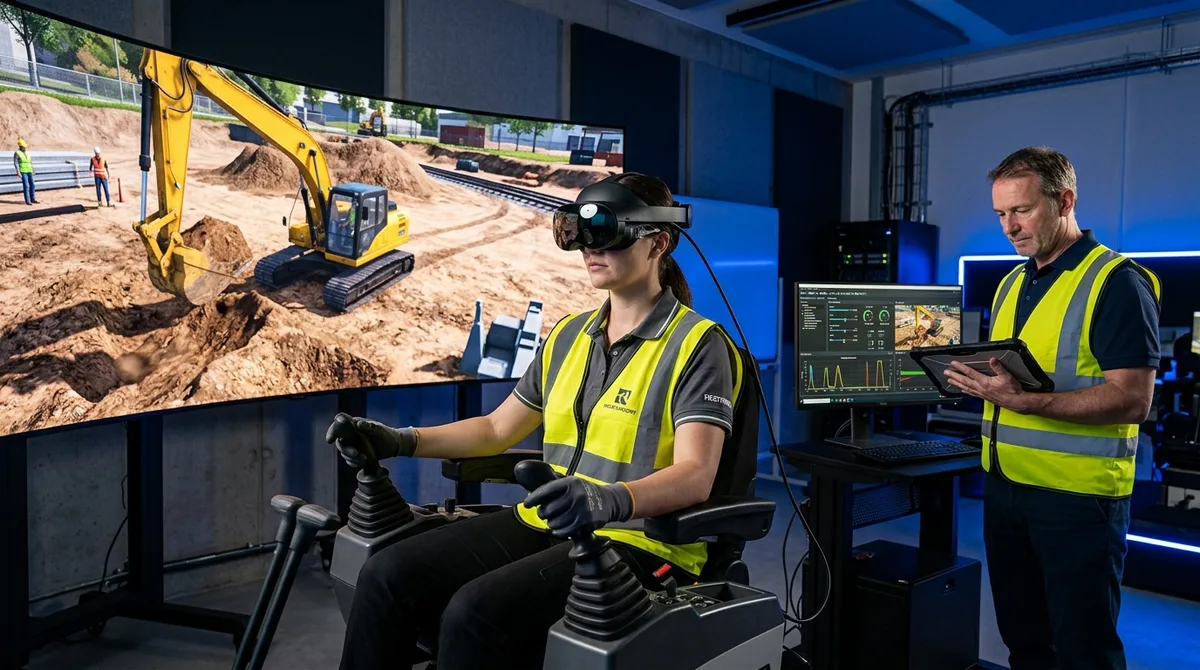
Heavy equipment simulator training uses VR to recreate machines like excavators, loaders, dozers, and cranes so operators can practice controls, spatial judgment, and safe operation without fuel, wear, or risk. It builds the muscle memory and hazard awareness that classroom training cannot, reduces equipment and fuel cost during training, and lets operators rehearse dangerous scenarios, like tip-overs and struck-by situations, safely.
Why Simulate Heavy Equipment Operation
Learning to operate heavy equipment on the real machine is expensive and risky. Every training hour burns fuel, adds wear, ties up a productive asset, and puts a novice in control of tons of moving steel. Simulator training removes all of that. The operator practices the controls, the spatial judgment, and the safe procedures in a virtual replica until the basics are automatic, then transfers to the real machine far more prepared.
Safe failure
A simulator lets a trainee tip a virtual machine, clip a virtual obstacle, or mishandle a virtual load, and learn from it instantly with zero cost or injury. Those are exactly the lessons that are too dangerous and expensive to teach on real equipment.
What VR Heavy Equipment Training Builds
- Control coordination. The combined hand and foot inputs of operating an excavator or loader become muscle memory through repetition.
- Spatial and load judgment. Operators learn to judge distances, swing radius, load centers, and stability in a safe environment.
- Hazard recognition. Struck-by, tip-over, and underground-utility scenarios can be rehearsed safely and often.
- Procedure discipline. Pre-operation checks and safe shutdown become habit before the operator touches the real machine.
Where It Fits in an Operator Program
Simulator training does not replace real-machine hours; it front-loads them. New operators build the fundamentals in VR, which means their time on the real machine is more productive and far less risky. For employers, that means lower fuel and maintenance cost during training, less downtime on productive equipment, and a documented record of operator competence before they ever go live. The same simulation approach applies to crane operation and forklift training.
What We See in VR Training Projects
From equipment simulator deployments, the consistent findings:
- Fundamentals transfer; final feel still needs the real machine. VR builds the controls and judgment; the last refinement happens on the real equipment, which is now faster because the basics are in place.
- The safety scenarios are the differentiator. The dangerous situations you cannot stage on real equipment are exactly the ones simulation handles best.
- Documented competence reduces liability. A per-operator record of demonstrated skill before live operation matters to safety and insurance.
Frequently Asked Questions
What is heavy equipment simulator training? +
It is the use of VR (or screen-based) simulators to let operators practice machines like excavators, loaders, dozers, and cranes in a realistic virtual environment, building controls, spatial judgment, and safe operation without fuel, wear, or risk.
Does simulator training replace real machine time? +
No, it front-loads it. Operators build the fundamentals in the simulator, so their time on the real machine is more productive and far less risky. The final feel of the real equipment still requires real hours, which are now more efficient.
What are the benefits of VR heavy equipment training? +
Lower fuel and maintenance cost during training, no downtime on productive equipment, safe practice of dangerous scenarios like tip-overs and struck-by situations, faster skill-building, and a documented record of operator competence before live operation.
What equipment can be simulated? +
Excavators, wheel loaders, dozers, backhoes, cranes, forklifts, and other heavy machines can all be recreated as VR simulations, including the specific models and controls an operator will use on the job for maximum transfer.
How does simulator training improve safety? +
It lets operators rehearse the dangerous situations, tip-overs, struck-by hazards, and utility strikes, that are too risky to stage on real equipment, and it builds correct procedure habits before the operator controls a real machine.
Training heavy equipment operators?
Tell us the machines and the skills your operators need. We will show you how a VR simulator program would work.