
Automotive Sales Training Simulation: A Better Way to Onboard Reps
Most dealerships onboard new reps the same way: a binder, a few days shadowing, and then the floor. The new hire learns the hardest parts of the job on real customers, and the dealership absorbs the cost in lost deals. Simulation offers a better path, dozens of complete sales conversations before the first real up.
QUICK ANSWER
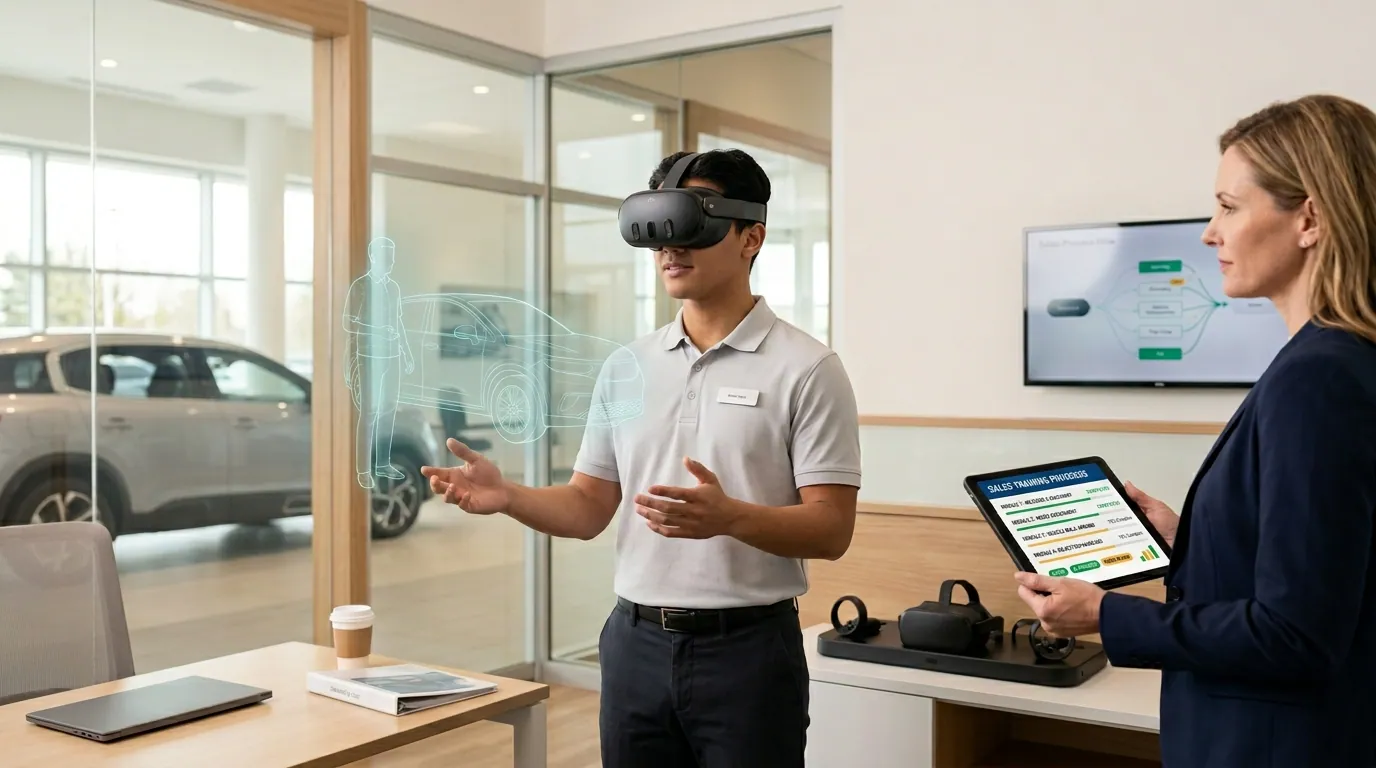
Automotive sales training simulation recreates the real dealership sales process in VR so new reps practice the complete conversation, greeting, trade-in, negotiation, and F&I, before facing live customers. It compresses onboarding by removing the dependence on real deal flow and manager availability, and it measures performance at each stage. According to PwC, VR learners reach competence up to 4x faster than classroom learners and are up to 275% more confident applying skills. Custom dealership simulation programs range from $35,000 to $150,000.
The Real Cost of Learning on the Floor
Traditional dealership onboarding has a structural flaw: the new rep's training ground is the live showroom. They greet real customers, attempt real trade-in conversations, and stumble through real negotiations while still learning the basics. Every conversation a new rep mishandles is a real opportunity lost, and the dealership pays for the rep's learning curve in missed deals and compressed margin.
The usual supplements do not fix it. A binder teaches process abstractly. Shadowing shows the new rep what good looks like but offers no hands-on practice and depends entirely on which senior rep they happen to follow. Manager role-play would help, but it is infrequent and inconsistent. The result is a ramp period that is longer, costlier, and more variable than it needs to be.
4x
VR learners reach competence up to 4x faster than classroom learners, shortening the ramp before a new rep contributes on the floor (PwC, 2022).
How Simulation Rebuilds Onboarding
Automotive sales training simulation lets a new rep run the complete sales conversation, repeatedly, in their first days, without a real customer or an available manager. The simulation models the dealership's actual process so the practice transfers directly. Each stage becomes a measurable scenario the rep can drill until it is clean:
- Greeting and needs discovery: The rep practices opening the conversation and uncovering what the customer actually wants before pitching a vehicle.
- Vehicle presentation and trade-in: The rep rehearses the walkaround and the trade-in valuation conversation, the stage where new reps most often lose control of the deal.
- Desking and negotiation: The rep works the payment and price conversation against a persona that pushes back, building the composure that only repetition produces.
- F&I handoff and disclosures: The rep practices a clean transition into finance and the required compliance language, reducing exposure from day one.
This is the onboarding layer of a broader VR sales training program, and it pairs naturally with focused VR sales training for automotive dealerships once reps are past the ramp.
| Onboarding Method | Hands-on Practice | Cost of Mistakes | Ramp Speed |
|---|---|---|---|
| Binder / course | None | Deferred to floor | Slow |
| Shadowing | Observation only | Deferred to floor | Variable |
| Live floor learning | Real, costly | Lost deals | Slow, risky |
| VR Simulation | Dozens of full reps | Zero, safe practice | Fast, measured |
A Vertical Built for Simulation
We are actively developing a VR sales demo for automotive because the vertical fits simulation almost perfectly. The dealership sales process is structured and repeatable enough to model precisely, the objections are predictable, and the cost of an undertrained rep is concrete and felt every month. That combination is exactly where simulation produces the clearest return.
Building that demo informs how we design onboarding programs. The scenarios that work are the ones grounded in a specific dealership's desking process and real customer language, which is why every program starts with mapping the actual sales process rather than importing a generic template.
275%
VR learners are up to 275% more confident applying their skills after training, which for a new rep means walking onto the floor ready instead of rehearsing on real customers (PwC, 2022).
What We See in Automotive Onboarding Simulations
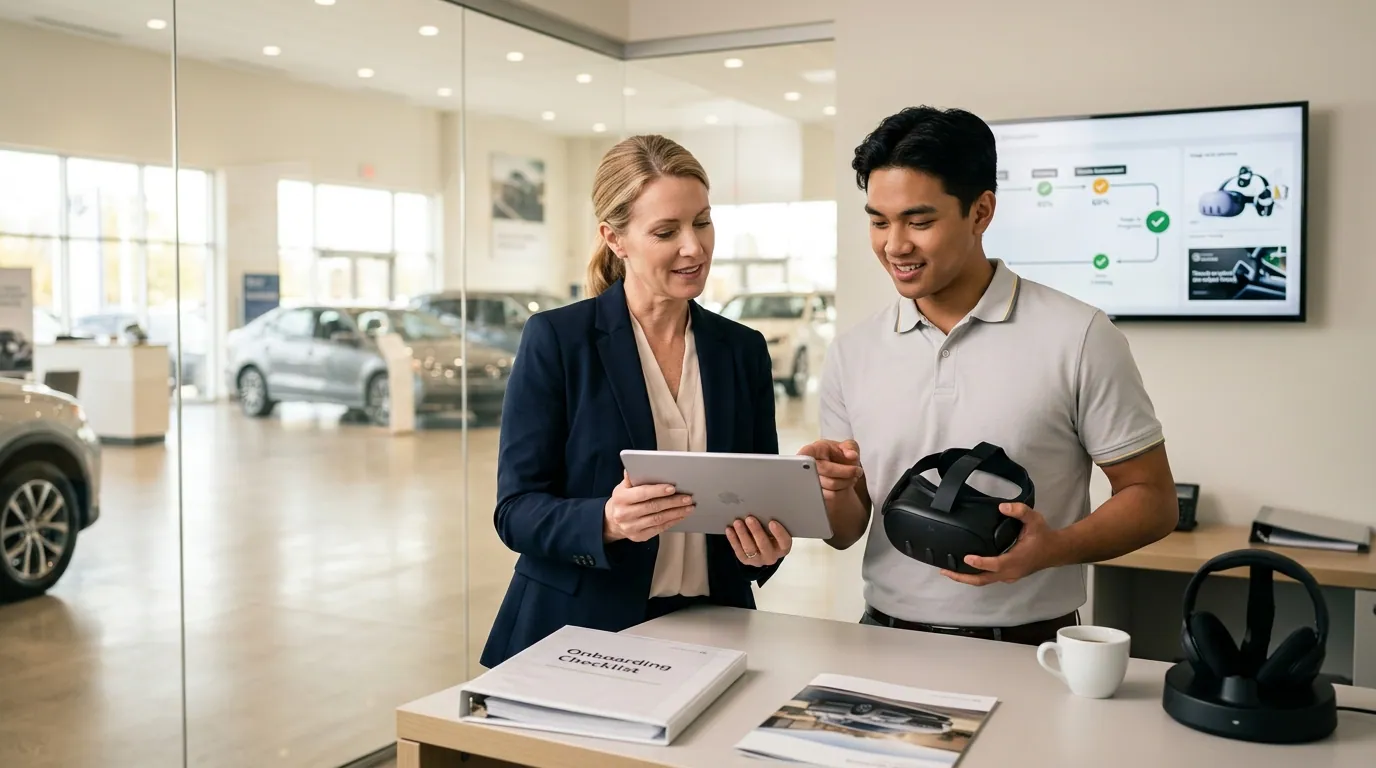
- Process mapping is half the work. The most effective programs start by modeling the dealership's exact desking and F&I flow, not a generic sales script, so practice transfers directly to that store.
- New reps run more reps than expected. Without the social cost of fumbling in front of a manager, new hires voluntarily repeat the hard stages many more times, which is exactly what builds skill.
- Trade-in and payment stages are the priority. Dealerships almost always start with the stages where new reps lose the most deals, getting fast, visible ROI.
- Reuse across rooftops compounds value. One onboarding simulation deployed across every store standardizes the new-hire experience and makes the owned-asset model far cheaper than per-rep licensing.
Frequently Asked Questions
What is automotive sales training simulation? +
Automotive sales training simulation is custom VR software that recreates the real dealership sales process, from greeting and needs assessment through trade-in, negotiation, and F&I, so new reps can practice the full conversation before working live customers. Unlike a course or video, simulation requires the rep to actually conduct the conversation against a realistic customer persona, and it measures how they perform at each stage. The goal is to compress the time it takes a new hire to become floor-ready.
How does simulation speed up onboarding a new automotive rep? +
Simulation removes the dependency on live deal flow and manager availability. A new rep can run dozens of complete sales conversations in their first week, in VR, instead of waiting for real ups and hoping a manager is free to role-play. PwC research shows VR learners reach competence up to 4x faster than classroom learners, which for a dealership means a new rep contributes sooner and burns fewer real opportunities while learning.
What parts of the dealership sales process can be simulated? +
The full process can be modeled: the meet-and-greet, needs discovery, vehicle walkaround and presentation, trade-in valuation conversation, the desking and payment negotiation, the walk-out save, and the F&I menu with required disclosures. Each stage becomes a practiceable, measurable scenario. Dealerships typically prioritize the stages where new reps lose the most deals, often trade-in pushback and payment objections.
Is simulation training better than shadowing a senior rep? +
They serve different purposes and work best together. Shadowing shows a new rep what good looks like but provides no hands-on practice and depends entirely on which senior rep they follow. Simulation gives the new rep repeated, consistent practice doing the conversation themselves, with measurable feedback. Most effective onboarding programs use shadowing for observation and simulation for the repetition that actually builds skill.
What does an automotive sales simulation program cost? +
Custom automotive sales training simulation programs range from $35,000 for a focused onboarding scenario set to $150,000 or more for the full sales process across multiple personas with F&I modules and multi-rooftop deployment. Dealer groups see per-store cost drop sharply because the same simulation deploys across every location, and the program is owned rather than licensed per rep each year.
Want new reps floor-ready before they touch a real customer?
Tell us your sales process and your ramp timeline. We will build a simulation that gets new hires producing sooner.