
Warehouse Manual Lifting VR Training: Case Picking, Team Lifts and the NIOSH Lifting Equation
VR manual lifting scenario using the NIOSH Revised Lifting Equation: case picking from low and high rack levels, twisting, team lifts and when to use equipment.
QUICK ANSWER
There is no specific OSHA lifting standard. OSHA uses the General Duty Clause for ergonomic hazards, and the NIOSH Revised Lifting Equation sets a recommended weight limit that starts at 51 pounds under ideal conditions and drops with distance, height, twisting and frequency. A VR scenario shows pickers how a 40-pound case becomes a high-risk lift at floor level.
What the Rule Requires
NIOSH Revised Lifting Equation: NIOSH publishes the Revised Lifting Equation, which calculates a recommended weight limit from a 51-pound load constant reduced by horizontal distance, vertical height, travel distance, asymmetry (twisting), lift frequency and coupling. A lifting index above 1.0 shows elevated risk. OSHA addresses lifting hazards through the General Duty Clause and its ergonomics guidance.
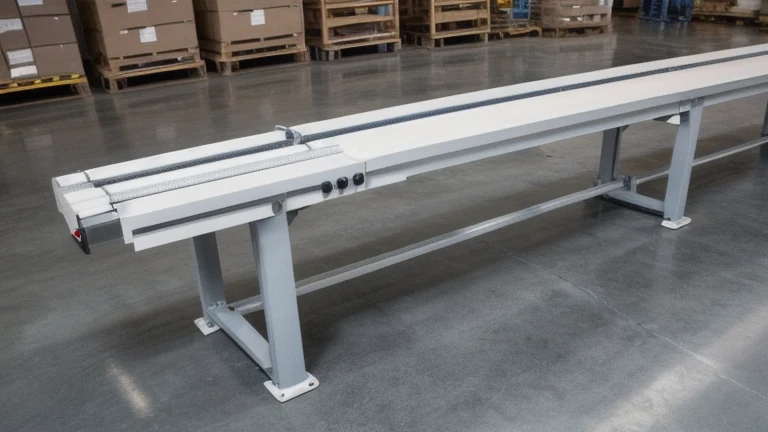
Case pickers repeat hundreds of lifts per shift, often from the bottom pallet layer and the top level of a flow rack. The scenario follows a picker filling store orders: 40-pound water cases on the floor level, light items above shoulder height, a pallet built in a twisting motion from a conveyor, and a 90-pound item that should be a two-person or equipment lift.
Hazards in This Scenario
- Low-back injury from lifting at floor level with the load far from the body
- Shoulder strain from repeated lifts above shoulder height
- Twisting while holding a load
- Single-person lifts of loads that need help or equipment
The Procedure the Scenario Rehearses
- Size up the load: weight, grip and where it goes
- Move the load close before lifting
- Lift from knee to waist height where the layout allows
- Turn with the feet instead of twisting
- Ask for a team lift or use a lift aid above the site limit
- Report layouts that force high-risk lifts
Mistakes the Scenario Is Built to Catch
- Reaching across a pallet to grab the far case
- Pivoting at the waist to put a case on the conveyor
- Carrying a heavy item alone to save time
- Placing heavy cases at the top of the flow rack
Competence Assessment Matrix
| Decision point | What the assessor sees | Pass standard |
|---|---|---|
| Size up | Load assessed before lifting | Weight and grip checked |
| Distance | Load moved close before the lift | Load close to the body |
| Twisting | Body turn while carrying | Feet turn, no waist twist |
| Help | Team lift or equipment request | Requested for loads above the limit |
What VR Covers
- Body position feedback on each lift
- Lift risk shown with a simple index on screen
- Layout choices the learner can change to lower risk
- A record of high-risk lifts per learner
What VR Does Not Replace
- Ergonomic redesign of the workstation or rack layout
- Medical and physical therapy guidance
- Real lift assists and their training
Scope of a One-Scenario Pilot
A pilot builds this scenario as a single module, in Unity or Unreal Engine depending on the visual fidelity the task needs and the headsets on site. It runs on standalone headsets, logs every learner decision, and exports a per-person record for your training file. It is measured against your current method with a test cohort before anything is scaled.
Frequently Asked Questions
Is there an OSHA weight limit for lifting?
No. OSHA has no specific weight limit. The NIOSH Lifting Equation is the common reference, with a 51-pound load constant reduced for real conditions.
What is a lifting index?
The load weight divided by the recommended weight limit. Values above 1.0 show increased risk.
Does lifting training alone reduce injuries?
Research suggests training alone has limited effect. It works best combined with changes to the layout and equipment.
Want this scenario built around your site?
We review your current procedure and tell you which parts can be rehearsed in VR and which still need hands-on practice.
Scope One ScenarioFurther reading
- Forklift Pre-Shift Inspection VR Training (OSHA 1910.178(q)(7))
- Forklift and Pedestrian Safety VR Training: Cross Aisles, Blind Corners and Shared Floors
- Forklift Refresher Training and Three-Year Evaluation in VR (OSHA 1910.178(l)(4))
- Forklift Ramps and Grades VR Training: Load Upgrade, Tilt and Unattended Trucks
- Warehouse ergonomics and lifting guide
- All VR training scenarios: United States
- VR pilot readiness checklist
- How VR training programs are priced