
Restaurant and Hotel Slips, Trips and Falls VR Training (OSHA 1910.22)
VR slips and trips scenario on OSHA 1910.22: wet and greasy floors, spills, cords, mats and housekeeping in kitchens, dining rooms and back-of-house hallways.
QUICK ANSWER
OSHA 1910.22 requires walking-working surfaces to be kept clean, orderly and, as far as possible, dry, with hazards like spills corrected or guarded promptly. Kitchens and dining rooms create those hazards every hour. A VR scenario trains staff to spot and fix them before someone falls.
What the Rule Requires
29 CFR 1910.22, Walking-working surfaces general requirements: all places of employment must be kept clean, orderly and in a sanitary condition, walking-working surfaces must be maintained free of hazards such as sharp or protruding objects, loose boards, corrosion, leaks, spills, snow and ice, and floors must be kept, so far as possible, in a clean and dry condition. Where wet processes are used, drainage must be maintained and dry standing places such as mats must be provided.
The scenario is a brunch shift. A bus tub drips across the dining room, grease builds up near the fryer, a mat is curled at the dish station and a cord crosses the walkway to a portable heater on the patio.
Hazards in This Scenario
- Wet and greasy floors
- Curled mats and cords
- Carrying trays that block the view
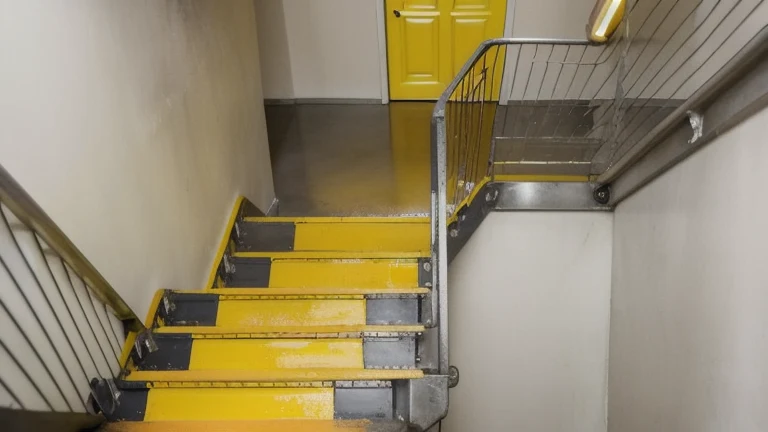
- Steps and changes in level
The Procedure the Scenario Rehearses
- Wear slip-resistant shoes
- Clean spills right away or guard them with a sign
- Fix or report curled mats and cords
- Carry loads you can see over
- Use the handrail on stairs
- Report recurring wet spots
Mistakes the Scenario Is Built to Catch
- Stepping around a spill to clean later
- Leaving the wet floor sign up after drying
- Running with trays
- Ignoring a curled mat
Competence Assessment Matrix
| Decision point | What the assessor sees | Pass standard |
|---|---|---|
| Hazard spotting | Hazards found | All main hazards found |
| Spills | Response time | Cleaned or guarded at once |
| Mats and cords | Fixes | Fixed or reported |
| Carrying | Load and view | Can see over the load |
What VR Covers
- Hazards hidden around a real layout
- Fast shift pace
- Spot-and-fix scoring
- Records per worker
What VR Does Not Replace
- Floor surface choices and drainage
- Slip-resistant footwear program
- Lighting and stair repair
Scope of a One-Scenario Pilot
A pilot builds this scenario as a single module, in Unity or Unreal Engine depending on the visual fidelity the task needs and the headsets on site. It runs on standalone headsets, logs every learner decision, and exports a per-person record for your training file. It is measured against your current method with a test cohort before anything is scaled.
Frequently Asked Questions
What does OSHA require for kitchen floors?
Surfaces kept clean and as dry as possible, with spills corrected, under 1910.22.
Are slip-resistant shoes required?
OSHA does not name them, but many employers require them as part of their PPE hazard assessment.
Is this scenario only for kitchens?
No. It covers dining rooms, hallways, stairs and patios.
Want this scenario built around your site?
We review your current procedure and tell you which parts can be rehearsed in VR and which still need hands-on practice.
Map Your Highest-Risk ScenarioFurther reading
- Hotel Housekeeping Injury Prevention VR Training (Cal/OSHA Title 8, Section 3345)
- Bloodborne Pathogens VR Training for Hotel Housekeeping and Engineering (OSHA 1910.1030)
- Commercial Kitchen VR Training: Knife Cuts, Slicers, Fryers and Hot Surfaces
- Guest De-Escalation VR Training for Hotel Front Desk and Restaurant Staff
- Walking-working surfaces safety guide
- All VR training scenarios: United States
- VR pilot readiness checklist
- How VR training programs are priced