
VR Training Software, Built Around Your Operation
Most VR training software is a per-seat subscription to a generic platform. We build the opposite: custom virtual reality training software designed around your real facility, equipment, and scenarios, and delivered as an asset you own. For safety, manufacturing, sales, and enterprise teams.
QUICK ANSWER
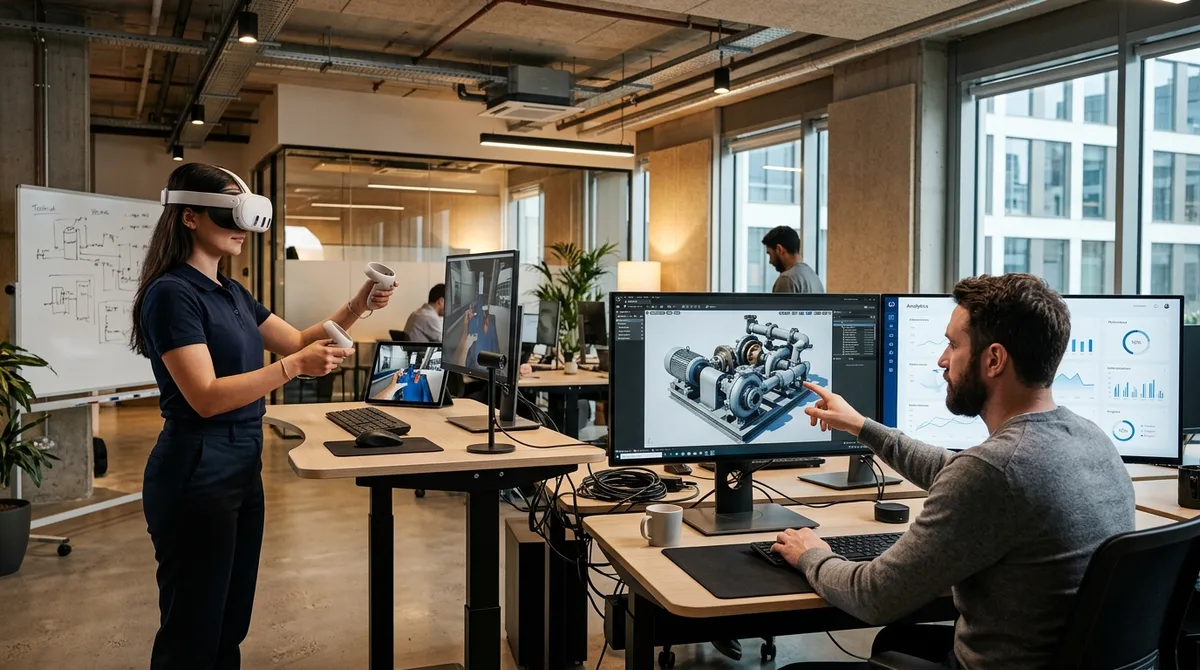
VR training software runs the immersive experience on a headset: the simulated environment, the interactions, the scoring, and the data. You can license a generic platform per seat, or build custom software around your actual operation. The Prime VR builds custom VR training software, owned rather than licensed, designed on your real facility, equipment, and scenarios, with per-learner analytics and LMS integration. Custom programs run from $25,000 to $500,000, and because they are owned they reuse across new hires and sites without per-seat fees.
Platform vs custom build
A platform is efficient for generic content at massive scale. A custom build wins when the scenarios that matter are specific to your operation, because training transfer depends on how closely the simulation matches the real job. The more your hazards, equipment, or sales situations differ from the generic case, the more the owned, custom approach pays off. What that means in practice: there is no Prime VR platform, no proprietary dashboard, no device manager and no course catalog to buy into. Every application is developed against your SOPs, your equipment, your environment and your objectives. LMS and xAPI integration, analytics, multiplayer and device deployment are scoped per project rather than bundled, and hardware compatibility is settled in technical discovery. Licensing, source-file ownership, maintenance and support are contract terms, not product features. The platform guide covers the build-versus-license decision, the implementation guide covers deployment and IT review, and the cost breakdown and pricing cover what it takes to build. To specify it formally, the RFP guide.
| Dimension | Platform (per seat) | Custom build (owned) |
|---|---|---|
| Fidelity to your operation | Generic | Your real facility and scenarios |
| Cost model | Per seat, every year | One build, owned and reused |
| Transfer to the job | Variable | High, built on real tasks |
| Best when | Generic content at huge scale | Specific, high-value skills |
What we build
- Safety and operations: high-risk scenarios practiced safely, on your real facility layout.
- Manufacturing: procedures, equipment operation, and quality on your actual lines.
- Sales: discovery, objection handling, and difficult conversations with virtual buyers.
- Enterprise and franchise: standardized onboarding and process consistency across every site.
How a custom VR training build is delivered
Software for training is only useful if it matches the work. A typical build moves through five stages, and the scope of each is confirmed in the proposal.
- Discovery: we document the procedures, hazards or conversations to be trained, using your own SOPs and your subject-matter experts.
- Scenario design: we agree the learning objectives, the decisions the learner must make, and how each decision is scored.
- Build: environments, interactions and scoring are built on your real facility layout, equipment or scripts.
- Pilot: a small group uses it on real headsets; we review data and feedback and adjust before wider release.
- Rollout and updates: deployment to sites, reporting into your LMS where needed, and edits when procedures change.
Hardware and deployment
The software runs on standalone headsets, so no PC or cable is needed at the training site. Devices can be managed centrally, and sessions can run in a break room, a classroom or a warehouse office. We plan headset count around class size and shift patterns, not around a generic ratio.
Data, privacy and integration
Each session can record completion, attempts, decisions and time spent per learner. Data is reported to your LMS or a dashboard depending on how your team already tracks training. Ask any vendor who owns the data and how learner records are stored; we address both in the project agreement.
When you should not build custom software
If your training is generic, changes rarely and needs to reach thousands of learners quickly, a per-seat platform is usually the better fit. Custom software earns its cost when the tasks are specific to your operation, the risk of a mistake is high, or the same procedure must be delivered the same way across many sites.
Frequently Asked Questions
What is VR training software?+
VR training software is the application that runs an immersive training experience on a virtual reality headset: the simulated environment, the interactions, the scoring, and the data layer that records how each learner performs. There are two ways to get it. A platform vendor licenses you a general-purpose application and content library per seat per year. A custom-build specialist like The Prime VR designs and develops the software around your specific facility, equipment, and scenarios, then delivers it as an asset you own. The right path depends on whether generic content transfers to your real job, or whether you need a simulation built on your actual operation.
Should we build custom VR training software or buy a platform?+
Buy a platform when your training is generic and you need broad coverage across a very large workforce at low per-seat cost. Build custom when the scenarios that matter, your hazards, your equipment, your sales situations, are specific enough that a generic environment will not transfer. Custom software costs more upfront but is owned, so it reuses across new hires and additional sites without per-seat licensing, and it can be built on your exact facility layout and incident data, which is the strongest predictor of training transfer.
How much does custom VR training software cost?+
Custom VR training software typically ranges from $25,000 for a focused single-scenario module to $500,000 or more for a multi-module, multi-site program with analytics and LMS integration. Because it is owned rather than licensed per seat, the per-learner cost falls as more people and sites use it, which is why the owned-asset model usually wins on total cost for high-turnover or multi-site operations over two to three years.
Does custom VR training software integrate with our LMS?+
Yes. Custom VR training software can report completion and per-learner performance to your existing LMS or LXP using standards like xAPI or SCORM, so VR practice sits inside your broader learning record rather than as a silo. Integration scope is defined during discovery so the data you need for compliance and reporting flows where it has to.
How long does a custom VR training build take?+
Timelines depend on scope. A focused single-scenario module is much shorter than a multi-site program. We give a schedule in the proposal after discovery.
Who owns the finished software?+
Ownership terms are set in the project agreement. Custom builds are designed so your organization keeps the training asset instead of renting it per seat every year.
Which headsets does it run on?+
Standalone headsets, so no PC is required. We recommend hardware based on your class size and environment.
Can the software be updated when procedures change?+
Yes. Scenarios can be edited when a policy, layout or product changes, so training does not go out of date.
Need VR training software built on your real operation?
Tell us the scenarios, workforce size, and systems to integrate. We will scope custom software around your actual facility and data. What gets built, what integrates and what you own are settled in scoping and in the contract, not preset by a product.