
What Is a Motor Skill?
The science behind learning by doing: gross vs. fine motor skills, the three stages every learner passes through, and why no amount of reading substitutes for repetition.
QUICK ANSWER
A motor skill is a learned, goal-directed movement that becomes faster, more accurate, and more consistent through practice, distinct from an unlearned reflex. Motor skills split into gross motor (large muscle groups, whole-body movement) and fine motor (precise, usually hand-based movement). Researchers Paul Fitts and Michael Posner described three stages every learner passes through: cognitive (slow, effortful, conscious), associative (smoother, fewer errors, still some conscious control), and autonomous (fast, accurate, largely automatic). Reaching the autonomous stage requires repeated, feedback-driven practice, not explanation, which is the core reason hands-on training exists as a category separate from classroom instruction.
A Motor Skill Is Not the Same as a Reflex
A reflex, pulling a hand back from a hot surface, is automatic, unlearned, and essentially the same for every person with an intact nervous system. A motor skill is the opposite on every count: it is learned, it improves specifically through practice, and it varies enormously between a novice and an expert performing the identical task. Tightening a fastener to the correct feel, walking a structural beam without looking down at every step, or operating a control panel by touch rather than by reading each label are all motor skills, capabilities built over time, not innate abilities a person either has or lacks from birth.
Gross Motor Skills vs. Fine Motor Skills
- Gross motor skills: movements using large muscle groups for whole-body actions, walking a job site, climbing a ladder safely, lifting and positioning heavy material, maintaining balance while working at height. These skills are foundational to physical safety on almost any hands-on job.
- Fine motor skills: precise, usually hand-based movements, turning a multimeter's dial to the correct setting, making a clean solder joint, adjusting a valve by feel, typing a diagnostic code into a scan tool without looking away from the vehicle. These are the skills that separate a technician who can do a task from one who can do it well, quickly, and correctly the first time.
Almost no real trade task is purely one or the other. Installing a water heater, wiring a panel, or diagnosing an engine combines gross motor coordination (positioning the body and the equipment safely) with fine motor precision (making the actual connections and adjustments correctly), which is exactly why training that isolates one and ignores the other tends to produce workers who are safe but slow, or fast but sloppy.
The Three Stages Every Learner Passes Through
In 1967, researchers Paul Fitts and Michael Posner described motor skill acquisition as a progression through three distinct stages, a model still widely used in sport science, physical therapy, and skills training today:
- Cognitive stage: movements are slow, inconsistent, and effortful, and the learner relies heavily on verbal instructions, thinking through each step consciously. Performance is erratic: the same person doing the same task twice in a row can get noticeably different results.
- Associative stage: movements become smoother and more reliable as the learner starts connecting specific actions to specific outcomes. Errors decrease, consistency increases, but some conscious attention to the task is still required, the skill is not yet automatic.
- Autonomous stage: the movement executes accurately and consistently with minimal conscious attention, freeing the mind to focus on the surrounding situation, a changing environment, a conversation, an unexpected complication, rather than the mechanics of the movement itself.
Reaching the autonomous stage for a genuinely complex skill is not fast. The research literature commonly frames it in terms of years of accumulated, repeated practice for high-complexity tasks, not a single training session or even a single course. Most workplace onboarding only takes a trainee through the cognitive stage, teaching them what to do, before putting them on the job, which is a significant part of why new-hire error rates and near-misses cluster in the first months of a physical role regardless of how well the classroom portion of training was delivered.
Why Reading and Watching Are Not Enough
Motor learning is encoded differently in the brain than declarative knowledge, facts, procedures, and instructions a person can recite. Watching a demonstration or reading a manual builds the cognitive-stage understanding, knowing what the steps are, but the associative and autonomous stages require the body to actually perform the movement repeatedly and receive feedback on whether the outcome was correct. This is why a trainee can describe a torque procedure, a wiring sequence, or a diagnostic routine word for word and still perform it clumsily, inconsistently, or too slowly the first several times they actually do it: the physical execution has to be practiced on its own terms, separately from the explanation, and no amount of additional reading substitutes for that repetition.
What "Muscle Memory" Actually Means
The everyday term "muscle memory" describes the practical experience of reaching the autonomous stage: a movement practiced enough times that it runs quickly and accurately with little conscious effort. The memory is not literally stored in the muscle tissue, it reflects learned changes in the motor control areas of the brain and spinal cord that coordinate the movement, but the colloquial phrase captures something real and useful: a well-practiced skill genuinely does feel automatic, and that automaticity is the entire point of extended, repeated practice rather than a side effect of it.
Two Kinds of Feedback, and Why One Beats the Other
Motor learning research distinguishes between two categories of feedback a learner can receive, and the difference matters more than most training programs account for:
- Knowledge of results (KR): feedback about the outcome, pass or fail, correct or incorrect, on target or off. It tells the learner what happened but not why.
- Knowledge of performance (KP): feedback about the movement itself, which part of the technique was off, and, in its more useful "prescriptive" form, specifically what to change next time.
Research reviews on this topic have found that prescriptive knowledge of performance, told specifically what to adjust, outperforms outcome-only feedback, and that combining outcome feedback with prescriptive performance feedback outperforms either alone. A trainee simply told "you failed the torque check" (KR only) learns far less per repetition than one told "you stopped turning 15 degrees short of spec" (KP), because the second version gives the learner something concrete to correct on the very next attempt instead of guessing at what went wrong.
Does Practice in a Simulated Environment Actually Transfer?
This is a genuinely researched, and genuinely mixed, question, not a settled marketing claim. Studies on locomotor skills, walking adaptations practiced in VR, have found sustained transfer to real-world performance, including retention after repeated intervals. Other research on more fine, precision motor tasks has found limited or inconsistent transfer between a virtual environment and the physical world, and at least one study found that motor skills learned in a head-mounted VR environment did not transfer well to a conventional screen-based environment, underscoring that virtual and physical practice are not automatically interchangeable. Researchers point to differences in sensory-motor feedback, what a hand or body actually feels versus what it sees, as the likely explanation, along with practical factors like how much practice was actually logged and how long retention was measured.
The honest takeaway is that transfer is a design problem, not a guarantee that comes automatically with the word "VR." Training that closely replicates the real task's visual layout, sequence of actions, and feedback timing tends to transfer better than training that merely covers the same topic in a generic simulated format. This is also why haptic and visual feedback combined, not visual feedback alone, has been shown to accelerate learning in simulator research: the more a practiced motion matches what the body will actually feel and see on the job, the more the associative and autonomous stages built in practice carry over to real performance.
Skills Decay Without Use, and Not All at the Same Rate
A motor skill reaching the autonomous stage is not a permanent, one-time achievement. Skills that go unused for extended periods measurably decay, which is the entire premise behind recurrent training requirements in aviation, emergency response, and other high-stakes fields where a skill practiced once during initial training is not trusted to still be sharp a year later without refreshers. Research on short retention intervals (days to a couple of weeks) has found some motor skills hold up reasonably well over that specific window, but the practical implication for workplace training is the same either way: a skill trained once during onboarding and never revisited is not a stable asset, it is a depreciating one, and periodic refresher practice is what keeps a workforce's competence where initial training left it rather than where months of disuse have quietly eroded it to.
Why Standardized Training Timelines Produce Uneven Results
Individual variation in how quickly someone moves through the cognitive, associative, and autonomous stages is well established, and it depends on more than raw aptitude: prior experience with related tasks, the amount and specificity of feedback received during practice, and how closely the practice conditions matched the real task all shape how fast a given trainee actually gets there. This is precisely why a fixed, one-size-fits-all training schedule, everyone gets four hours of hands-on practice, then certified, produces uneven real-world competence across a cohort. Some trainees genuinely reach reliable, autonomous performance before the scheduled time runs out; others need meaningfully more repetitions than the schedule assumes, and a program that cannot flex practice time to the individual is effectively certifying some people before they are actually ready.
Why This Determines How Training Should Actually Be Built
A training program built primarily around explanation, a lecture, a manual, a video walkthrough, is structurally capable of only one thing: moving a learner into the cognitive stage. It cannot, by itself, produce the associative or autonomous competence a real job requires, because that competence is built through repetition and feedback on physical performance, not through better-explained instructions. Programs that treat "we trained them" as synonymous with "we showed them a video" are measuring the wrong thing entirely, since the gap between cognitive-stage knowledge and autonomous-stage skill is exactly where workplace incidents, rework, and slow ramp-up time live.
WE BUILD THIS IN VR — THE PRIME VR
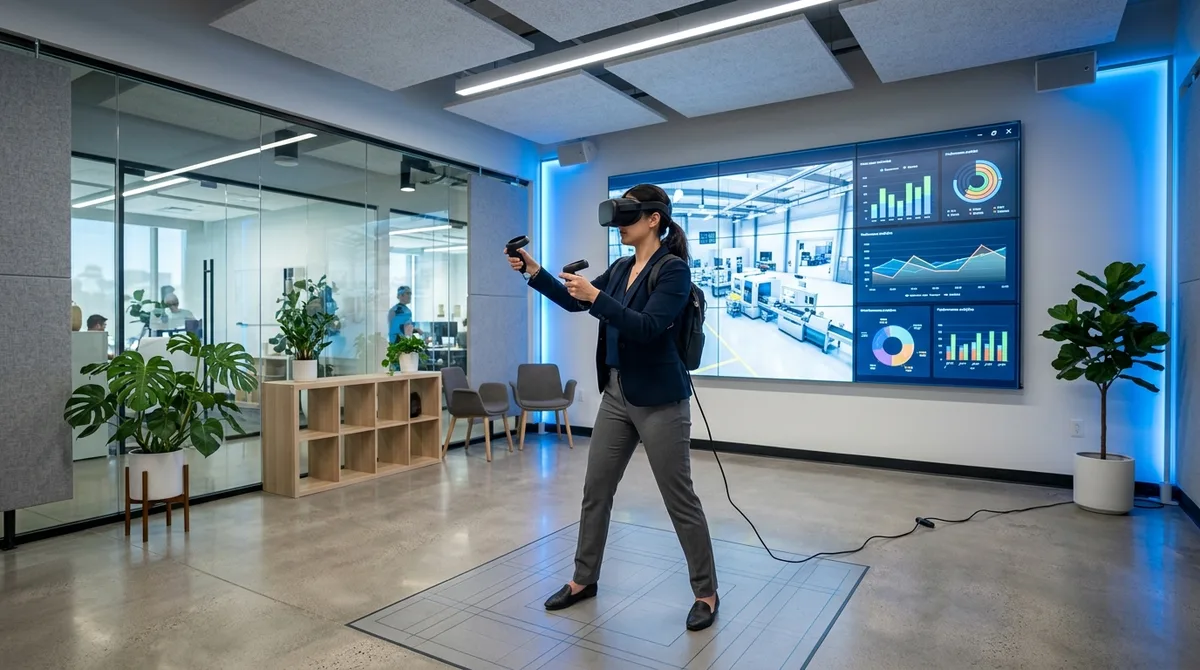
This is the entire premise behind what we build: VR training that lets a trainee physically repeat a procedure dozens of times with immediate, scored feedback on every attempt, moving them from the cognitive stage toward the associative and autonomous stages faster and more safely than practicing for the first time on a live job. A video can only get a trainee to "I understand it." Repetition with feedback is what gets them to "I can do it correctly under pressure."
Book a discovery callFrequently Asked Questions
What is a motor skill? +
A learned, goal-directed movement or sequence of movements that becomes faster, more accurate, and more consistent through practice, as distinct from a reflex, which is automatic and unlearned. Tightening a bolt to the correct torque by feel, walking a beam, or operating a control panel by muscle memory are all motor skills built through repetition, not something a person is simply born able to do well.
What is a motor skill in psychology? +
In psychology and kinesiology, a motor skill specifically refers to the capacity to execute a movement pattern that has been learned and refined through practice, studied as a distinct category from cognitive skills (knowledge and reasoning) even though most real-world tasks combine both.
What are the different kinds of motor skills? +
The primary distinction is gross motor skills, movements using large muscle groups for whole-body actions like walking, lifting, or climbing, versus fine motor skills, precise movements usually involving the hands and fingers, like adjusting a small fastener, using a multimeter's dials, or making a precise weld. Most skilled trade work requires both categories working together, not one in isolation.
What are the stages of motor skill development? +
The most widely used model, from researchers Paul Fitts and Michael Posner, describes three stages: cognitive (slow, effortful, error-prone, the learner is consciously thinking through every step), associative (movements become smoother and more consistent as the learner starts connecting actions to outcomes), and autonomous (the skill runs with little conscious attention, freeing the mind to focus on the task around it rather than the movement itself).
How long does it take to reach the autonomous stage? +
It varies enormously by task complexity, but the research consensus is that true autonomous-stage performance, where a skill runs with minimal conscious attention, typically requires extended, repeated practice, often described in the literature as taking years for complex skills, not hours. Most workplace training only gets a trainee through the cognitive stage before putting them on the job, which is a large part of why early-career error rates are higher.
Why can't you learn a motor skill just by watching or reading about it? +
Because motor learning is encoded differently in the brain than declarative knowledge (facts and instructions), watching or reading builds the cognitive-stage understanding of what to do, but the associative and autonomous stages require the body to actually perform the movement repeatedly and receive feedback on the outcome. A trainee can describe a procedure perfectly and still perform it clumsily the first time, because the physical execution has to be practiced separately from the explanation.
What is muscle memory? +
A common, informal term for the autonomous stage of motor learning: a movement pattern practiced enough times that it executes quickly and accurately with minimal conscious thought. It is not stored in the muscles themselves, it reflects changes in the motor areas of the brain and spinal cord that control the movement, but the everyday term captures the practical experience of a well-practiced skill feeling automatic.
Why does this matter for job training? +
Because a training program built only around explaining a procedure, a lecture, a manual, a video, only ever gets a trainee to the cognitive stage of the skill it is trying to teach. Building competence that survives real-world pressure requires enough repeated, feedback-driven practice to reach the associative and autonomous stages, which is a fundamentally different design problem than writing better documentation or a clearer slide deck.
What is the difference between knowledge of results and knowledge of performance? +
Knowledge of results tells a learner the outcome, pass or fail, on target or not, without explaining why. Knowledge of performance describes the movement itself, and in its most useful form tells the learner specifically what to adjust. Research finds that combining outcome feedback with specific, prescriptive performance feedback produces better learning than either type alone.
Do people learn motor skills at the same rate? +
No. Individual variation in motor learning rate is well documented and depends on factors including prior related experience, the amount and quality of feedback received, and how closely practice conditions match the real task. This is one reason standardized, one-size-fits-all training timelines produce inconsistent real-world competence across a cohort, some trainees reach autonomous performance well before the scheduled training ends, others need meaningfully more repetitions than the schedule assumes.
Build real competence, not just awareness
We turn repetition and feedback into scored VR practice that builds real motor skill.