
Confined Spaces in Basements VR Training for Muscat Construction Crews
Practise confined spaces in basements decisions in Muscat with custom VR: spot changed conditions, stop unsafe work and verify controls.
QUICK ANSWER
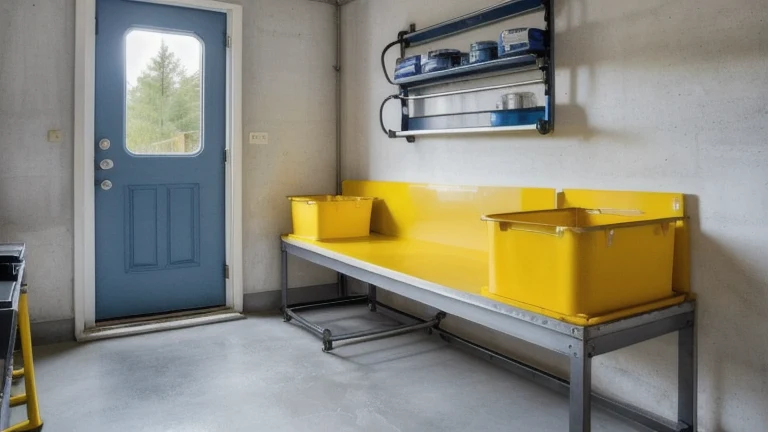
VR supports confined spaces in basements training in Muscat by letting workers rehearse a safety decision before real exposure. This scene uses a hospital basement wastewater chamber, where a changed discharge arrangement affects potential incoming water. The learner investigates the space assessment, entry controls and workable rescue plan and explains who can approve the next step. The Muscat hospital basement wastewater chamber brief also asks how the crew responds when the inspection team expects only a brief entry.
What the Rule Requires
Oman Labour Law (Royal Decree No. 53 of 2023): Oman's cited Labour Law is the starting reference for the employer reviewing confined spaces in basements at the hospital basement wastewater chamber. Identify how the space assessment covering isolation and rescue access is accepted and who remains responsible for space classification, atmospheric interpretation and rescue capability outside the scenario. The employer must confirm current requirements with the regulator and the operator for the Muscat hospital basement wastewater chamber.
The setting is a fictional hospital basement wastewater chamber in Muscat, where a changed discharge arrangement affects potential incoming water. Progress is tempting because the inspection team expects only a brief entry. The trainee must raise a clear concern with the entry supervisor coordinating the pump system, describe who could be exposed and establish the evidence needed before release.
What can go wrong with confined spaces in basements at this Muscat site?
The Muscat setting is a hospital basement wastewater chamber, where a changed discharge arrangement affects potential incoming water. Start by asking what this means for deciding whether entry to a basement sump can proceed, rather than assuming the previous briefing still covers the work. The immediate concern is unsafe atmosphere or failed escape from a restricted space. In this scene, the inspection team expects only a brief entry, so a worker has a plausible reason to accept an informal workaround. The exercise asks the learner to inspect the space assessment, entry controls and workable rescue plan and explain the uncertainty. Place a ventilation duct disconnected beside the access opening where it can be noticed from a safe position, without requiring a risky approach merely to earn a score.
For the Muscat crew, a useful stop message says why they must refuse entry until the competent team verifies the entry conditions and what needs to happen next. Direct that message to the entry supervisor coordinating the pump system, with the space assessment covering isolation and rescue access identified as part of the restart decision. The hospital basement wastewater chamber should remain controlled while the issue is assessed; a report alone is not physical protection. Explore assuming a basement is safe because its door is open during the debrief and ask how it could affect people beyond the immediate work front. In confined spaces in basements, learners should know the limits of their authority as well as their right to raise a concern.
How is the Muscat confined spaces in basements scenario built and assessed?
The Prime VR develops the Muscat scene by reviewing the employer's method for deciding whether entry to a basement sump can proceed and the layout features that influence it. At the hospital basement wastewater chamber, the important details are the changed condition, the available controls and the route to the entry supervisor coordinating the pump system. Keep unrelated scenery secondary. Show a ventilation duct disconnected beside the access opening without supplying the answer, then let the learner inspect, ask for evidence or stop. A branch involving the space assessment covering isolation and rescue access can test whether the participant understands what must be verified before release.
The score for this Muscat rehearsal should describe whether the trainee achieves current authorised checks with an attendant and effective rescue arrangements. At the hospital basement wastewater chamber, noticing the cue is only part of the assessment: the learner must explain the hold and identify who can accept the space assessment covering isolation and rescue access. Define critical errors around unsafe atmosphere or failed escape from a restricted space before running the cohort. Ask a follow-up question about space classification, atmospheric interpretation and rescue capability to check that the learner does not overstate what the simulation proves. Competent assessment of atmosphere testing, entry equipment use and realistic rescue exercises still takes place under the employer's real-world arrangements, with the appropriate equipment and supervision.
Who needs confined spaces in basements practice in Oman, and when should they repeat it?
Give participants role-appropriate decisions so a general worker is not asked to approve space classification, atmospheric interpretation and rescue capability. Review the words used for the space assessment, entry controls and workable rescue plan with crew representatives, particularly where signs and spoken instructions use different terms. Allow questions before assessment. The trainer should listen for a learner's own explanation of a ventilation duct disconnected beside the access opening, rather than accept a repeated phrase supplied by another worker. Arrange atmosphere testing, entry equipment use and realistic rescue exercises through the employer's training process and make the follow-up visible to the supervisor who will observe the person doing the actual task.
A change such as ventilation loss, incoming water or nearby exhaust affecting the space should prompt the employer to review the Muscat lesson and decide whether more practice is needed. At the hospital basement wastewater chamber, the relevant question is whether workers can still apply the space assessment, entry controls and workable rescue plan under the current arrangement. Ask the entry supervisor coordinating the pump system to use observations, procedure changes and task exposure when planning refreshers. The confined spaces in basements module does not replace certification, permits or hands-on training.
How would a confined spaces in basements pilot run at the hospital basement wastewater chamber?
Begin the Muscat pilot with a scoping call about the hospital basement wastewater chamber, the learner roles and the decision to refuse entry until the competent team verifies the entry conditions. Bring approved procedure extracts and a simple layout showing the interfaces associated with the space assessment covering isolation and rescue access. Ask the entry supervisor coordinating the pump system to check the proposed stop and restart branches. The initial mockup should make the scope around deciding whether entry to a basement sump can proceed concrete, while leaving technical acceptance and the final development schedule subject to the agreed project requirements.
Review the Muscat trial by asking whether participants can recognise a ventilation duct disconnected beside the access opening and explain the appropriate follow-up without prompts. Compare those observations with the employer's current teaching for confined spaces in basements, using the same decision criteria. At the hospital basement wastewater chamber, a supervised discussion can check whether trainees know how to obtain the space assessment covering isolation and rescue access in practice. Invite the entry supervisor coordinating the pump system to identify gaps in the procedure as well as gaps in the lesson. Keep atmosphere testing, entry equipment use and realistic rescue exercises in the follow-up plan and avoid treating a short pilot as proof of fewer incidents, stronger physical skills or automatic compliance.
Hazards in This Scenario
- Atmosphere unsafe for entry
- Ventilation interrupted
- Unexpected water entry
- Unplanned attempted rescue
The Procedure the Scenario Rehearses
- Obtain competent space assessment
- Confirm entry authority and isolation
- Verify required atmospheric checks
- Check ventilation and communication
- Confirm attendant and rescue readiness
- Refuse entry after unsafe changes
Mistakes the Scenario Is Built to Catch
- Entering on an old atmosphere reading
- Leaving the attendant post unstaffed
- Ignoring nearby engine exhaust
- Attempting an unplanned entry rescue
Competence Assessment Matrix
| Decision point | What the assessor sees | Pass standard |
|---|---|---|
| Assessment | Sump status unconfirmed | Obtain competent space assessment |
| Ventilation | Duct disconnected | Keep entry suspended |
| Communication | Attendant cannot contact entrant | Follow the agreed withdrawal response |
| Emergency | Worker becomes unresponsive | Raise alarm without unplanned entry |
What VR Covers
- Changed-condition rehearsal at the hospital basement wastewater chamber
- Inspection choices involving the space assessment, entry controls and workable rescue plan
- Reporting practice with the entry supervisor coordinating the pump system
- Feedback linked to the space assessment covering isolation and rescue access
What VR Does Not Replace
- Practical instruction in atmosphere testing, entry equipment use and realistic rescue exercises
- Competent decisions about space classification, atmospheric interpretation and rescue capability
- Real permits, certification and work authorisation for the hospital basement wastewater chamber
Scope of a One-Scenario Pilot
A pilot builds this scenario as a single module, in Unity or Unreal Engine depending on the visual fidelity the task needs and the headsets on site. It runs on standalone headsets, logs every learner decision, and exports a per-person record for your training file. It is measured against your current method with a test cohort before anything is scaled.
Frequently Asked Questions
What is the first decision in Muscat confined spaces in basements training?
At the Muscat hospital basement wastewater chamber, learners first consider why a changed discharge arrangement affects potential incoming water affects the planned task. They should inspect the space assessment, entry controls and workable rescue plan before accepting a request to continue.
What practical work stays outside the Muscat confined spaces in basements module?
For the hospital basement wastewater chamber, retain atmosphere testing, entry equipment use and realistic rescue exercises under competent supervision outside VR. Ask the entry supervisor coordinating the pump system to specify the follow-up observations required, and make sure the training record distinguishes a rehearsed decision from actual permission to perform the task.
Which inputs are useful when scoping Muscat confined spaces in basements?
Supply a simple representation of the hospital basement wastewater chamber and the approved records behind the space assessment covering isolation and rescue access. The design brief should explain that the inspection team expects only a brief entry, rather than leave the crew's competing demand out of the scene.
What could trigger a refresher for Muscat confined spaces in basements?
For this Muscat task, ventilation loss, incoming water or nearby exhaust affecting the space may justify reviewing the lesson and planning another session. The employer determines timing at the hospital basement wastewater chamber, using task exposure and observed understanding. The Muscat hospital basement wastewater chamber reviewer should also explain how the space assessment covering isolation and rescue access supports the decision.
How is language understanding checked for Muscat confined spaces in basements?
Language review at the hospital basement wastewater chamber should confirm that the response to a ventilation duct disconnected beside the access opening is understood, not merely repeated. Ask the entry supervisor coordinating the pump system to check local names for controls and reporting roles before those words become part of the scored scenario.
What does the 48-hour mockup offer mean for Muscat confined spaces in basements?
The hospital basement wastewater chamber concept can be reviewed through The Prime VR's offer of a mockup within 48 hours after a scoping call. Settle the treatment of the space assessment covering isolation and rescue access, the approval owner and the remaining production scope before planning the learner rollout.
Running this scenario across several sites or contractors?
We review your current procedure and tell you which parts can be rehearsed in VR and which still need hands-on practice.
Plan a Multi-Site PilotFurther reading
- Work at Height VR Training for Muscat Construction Crews
- Guardrails and Edge Protection VR Training for Muscat Construction Crews
- Scaffold Erection and Inspection VR Training for Muscat Construction Crews
- Mobile Scaffold Towers VR Training for Muscat Construction Crews
- Confined Spaces in Basements
- Construction safety training programs
- All VR training scenarios: Oman
- VR pilot readiness checklist
- How VR training programs are priced