
Tanker Endorsement: Liquid Surge and Safe Hauling
Hauling liquid is nothing like hauling a dry load, because the cargo moves. The tanker endorsement exists because that movement changes how a truck handles. Here is what it covers and why.
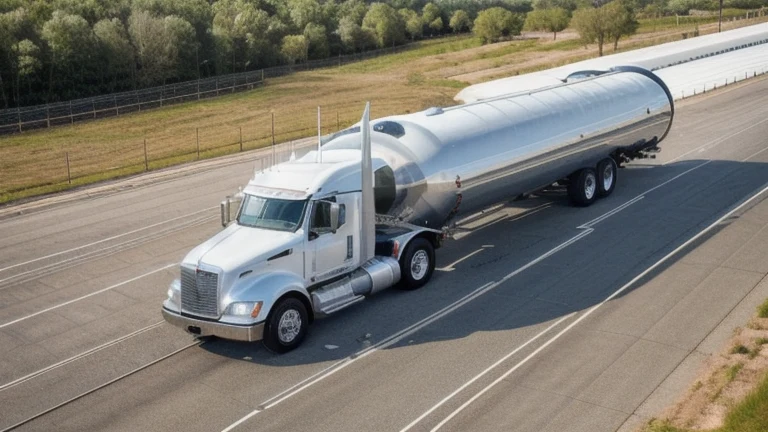
QUICK ANSWER
The CDL tanker (N) endorsement is required to haul liquids or gases in bulk. It covers the effects of liquid surge, which shifts the load and can push a truck forward or sideways, plus safe filling, driving, and braking. Drivers must adjust their following distance, braking, and turns because a tanker behaves very differently from a solid load.
Why Liquid Surge Matters
A partially filled tank lets liquid slosh, called surge. When the driver brakes, the liquid keeps moving and can shove the truck forward through a stop. On turns, it can push the vehicle sideways. Understanding and driving for surge is the heart of the tanker endorsement.
What Drivers Must Know
- Surge effects: how liquid movement changes handling.
- Smooth control: gentle braking, acceleration, and steering.
- Following distance: extra space for longer stopping.
- Filling and stability: baffles, bulkheads, and load limits.
Smoothness is safety
The safe tanker driver does everything gradually. Sudden inputs let surge take control, which is exactly how tankers roll over or overshoot a stop.
The tanker endorsement often combines with HazMat for hauling hazardous liquids, and builds on solid CDL driver training.
WE BUILD THIS IN VR — THE PRIME VR
We build tanker driving into VR, so drivers experience liquid surge and practice smooth braking and turns in scenarios impossible to stage safely on a real road. Immersive practice builds the gentle control tankers demand, with handling scored.
Book a discovery callBaffles and Surge
Smooth bore tanks let liquid surge forward and back, while baffled tanks reduce movement. Both require careful acceleration and braking.
Avoid sudden inputs.
Center of Gravity and Rollover
Liquid loads raise the center of gravity and increase rollover risk. Slow down for curves and ramps.
Reduce speed more than for a solid load.
Loading, Unloading and Outage
Leave room for expansion and follow procedures for hoses, grounding and spill prevention.
Know the products you carry.
Preparing for the Knowledge Test
Study surge, baffles, loading procedures and emergency response. Practice questions help identify gaps.
Review your state's manual.
Hazards of Different Cargo
Different liquids bring different risks, from flammability to corrosion. Know how to read shipping papers and follow handling rules.
When cargo requires additional endorsements, plan ahead.
Why Liquid Loads Behave Differently
A tank trailer does not carry a load the way a box trailer does. The liquid inside moves, and that movement is called surge. When the driver brakes, the liquid pushes forward and then rebounds. When the driver accelerates or turns, it shifts sideways or backward. Each shift transfers energy to the vehicle at exactly the moment the driver is trying to control it.
This is why tankers are more prone to rollovers than most other combinations. The center of gravity is high, and the load itself is not fixed in place. A driver who understands surge learns to brake earlier, smoother and more gently than they would with a solid load, and to take curves and ramps at speeds well below the posted advisory.
Baffles inside the tank reduce surge, but they do not eliminate it. Smooth tanks without baffles, common for food grade and some chemical loads, allow the liquid to move freely from end to end. Drivers should know which type they are hauling and adjust their technique to match.
Partially Filled Tanks and Outage
Outage is the space left empty in a tank to allow for liquid expansion when temperatures rise. Filling a tank completely can be dangerous, since expansion may cause overflow or excessive pressure. Different products expand at different rates, so the correct outage depends on the load and conditions.
A half full tank presents the opposite problem. It has the most room for liquid to build momentum, so surge can be severe. Drivers who accept partial loads must be especially careful, and they should treat every stop, start and turn as a potential trigger for a dangerous shift in weight.
Compartmented tanks help by dividing the load into smaller sections. Even so, uneven loading between compartments can affect handling and axle weights, so drivers need to check both the weight distribution and the legal limits before leaving the loading site.
Loading, Unloading and Vapor Concerns
Many tank loads are hazardous materials, so loading and unloading involve more than opening a valve. Drivers must verify the product, check the paperwork and ensure that connections are secure and compatible. Grounding and bonding may be required to prevent static discharge when handling flammable liquids.
Vapors can be as dangerous as the liquid. Some are toxic, some are flammable and some displace oxygen. Drivers should stay upwind, avoid ignition sources and keep the area clear of unauthorized people during transfer operations.
Never leave a transfer unattended when procedures require attendance. Know where the emergency shutoff is, and be prepared to use it. Practicing these routines until they are automatic reduces the chance of error when a problem arises.
Inspection Points Specific to Tankers
A pre-trip for a tank vehicle includes everything expected of a commercial vehicle, plus items specific to the tank. Check the shell for dents or leaks, and confirm that manways, hatches and valves are closed and secured. Inspect vents, gaskets, fittings and emergency devices.
Look for signs of product leakage around valves and outlets, since small leaks can indicate failing seals. Verify that required placards and markings are present and correct, and that documentation is complete and accessible.
Any defect that could affect containment should be taken seriously. A tank that is not sound should not be driven, no matter how tight the schedule. Reporting and documenting defects keeps carriers and drivers on the right side of safety and regulation.
Training for Judgment Under Pressure
The endorsement exam tests knowledge, but real tanker work tests judgment. A driver must decide how fast to enter a curve, how to respond when the load begins to surge and when to refuse a load that seems unsafe. These decisions rely on experience that new drivers do not yet have.
Simulation helps fill the gap. Learners can experience surge in a controlled environment, see how different inputs affect stability and practice recovering from mistakes without any danger to themselves or the public.
Combined with classroom instruction and supervised road time, this kind of practice builds the habits that keep drivers and communities safe. It also gives employers more confidence in the people they place in charge of valuable and potentially hazardous loads.
Common Mistakes and How to Avoid Them
New tanker drivers most often get into trouble by braking too late, entering ramps too fast and treating a partially loaded tank like a full one. Each of these underestimates how much energy a moving liquid carries.
Supervisors can help by making it acceptable to pause and ask. A culture where questions are treated as competence rather than weakness produces fewer errors in tank vehicle operation.
How Employers Evaluate Readiness
Carriers hiring tanker drivers look at more than the endorsement. They want evidence of smooth driving habits, clean inspection history and an understanding of surge that goes beyond the test questions.
Keeping Skills Current
Products, equipment and regulations change, and a driver who hauls different commodities needs to relearn the specifics each time. Reviewing the load characteristics before every new product is basic professionalism.
Frequently Asked Questions
What is the CDL tanker endorsement? +
The tanker (N) endorsement is required to haul liquids or gases in bulk. It covers liquid surge, safe filling, and the smooth driving techniques a tanker requires because the moving load changes handling.
What is liquid surge? +
Liquid surge is the movement of liquid in a partially filled tank. When braking or turning, the liquid keeps moving and can push the truck forward or sideways, making smooth control essential.
Do you need HazMat and tanker together? +
To haul hazardous liquids in bulk, drivers often need both the tanker and HazMat endorsements. The combination, sometimes called the X endorsement, covers both the cargo type and the hazard.
What is outage in a tanker? +
The space left at the top of a tank to allow for expansion of liquid.
Does a tanker endorsement include a test? +
Yes, applicants take a knowledge test, and some also need hazmat endorsement depending on cargo.
RELATED ARTICLES
Feel the surge, safely
We build tanker driving into immersive, scored VR practice.