
Empathy in Customer Service: The Skill Behind Every Good Interaction
Empathy is not softness, it is the operational skill that resolves faster and retains more. Customers forgive problems, they rarely forgive feeling dismissed.
QUICK ANSWER
Empathy in customer service means genuinely understanding and reflecting the customer feelings and situation, through active listening, acknowledging emotion, and adapting tone. It resolves issues faster and drives loyalty because customers respond to feeling understood, not to scripted phrases.
Empathy Is Operational
Empathy is often dismissed as soft, but it is the most practical service skill there is. A customer who feels understood is easier to help, more patient, and more loyal. Empathy shortens interactions and prevents escalations.
How It Shows Up
- Active listening: hearing the concern and the emotion behind it.
- Acknowledging emotion: naming what the customer feels, genuinely.
- Adapting tone: matching the customer state rather than a fixed script.
A Practiced Skill
Genuine empathy is built by reps, not scripts, which is why VR roleplay practice and de-escalation matter.
WE BUILD THIS IN VR — THE PRIME VR
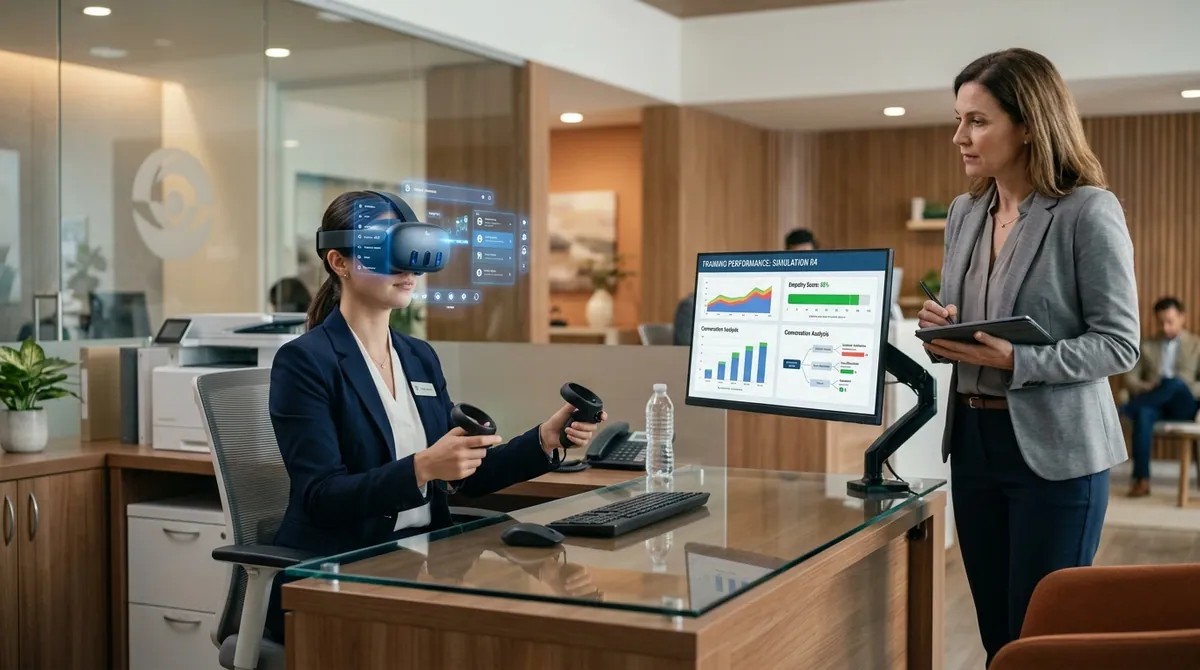
We build empathy into VR so service staff practice active listening and genuine acknowledgment with realistic virtual customers. The scenario rewards authentic responses and exposes the scripted, dismissive habits customers can feel.
Book a discovery callFrequently Asked Questions
Why is empathy important in customer service? +
Because customers respond to feeling understood. Empathy resolves issues faster, prevents escalations, and drives loyalty. Customers forgive problems but rarely forgive feeling dismissed.
Is empathy a skill that can be trained? +
Yes. Empathy in service shows up as active listening, acknowledging emotion, and adapting tone, all of which can be taught and improved through realistic practice.
How does VR build empathy in service staff? +
VR lets staff practice genuine listening and acknowledgment with realistic customers, building authentic responses rather than the scripted phrases customers can detect.
RELATED ARTICLES
Build empathy that customers feel
We build empathy roleplay into scored VR simulations.