
Best Workplace Safety Training Companies (2026)
The leading workplace safety training companies cover OSHA compliance, credentialing, and on-site instruction. This guide compares the top providers by what each is best for, then covers immersive VR for the high-risk, hands-on scenarios that video and classroom training cannot safely teach.
QUICK ANSWER
The best workplace safety training companies in 2026 are the National Safety Council and NASP for standards-based and credentialed training, ClickSafety and 360training for online OSHA courses at scale, and Coggno and NAVEX for LMS or GRC-based programs. These cover content and compliance. For high-risk physical work, falls, forklift, confined space, hazmat, immersive VR safety training (such as custom programs from The Prime VR) lets workers practice the dangerous scenarios safely, which is exactly what video and classroom training cannot do.
How to read this list
Most differences here are about format and risk level, not quality. Match the provider to your topics and delivery need: online compliance content, on-site credentialing, LMS tracking, or hands-on practice. Each entry is tagged with what it is best for.
The companies, and what each is best for
National Safety Council (NSC)
Best for: Standards-based content and on-site training
A trusted nonprofit authority on workplace safety, widely used for foundational safety content and on-site instruction across industries.
ClickSafety
Best for: Construction and OSHA online courses
Known for interactive online OSHA courses with 24/7 access, a strong fit for construction schedules and distributed crews.
360training
Best for: High volume, low cost across many topics
A large course catalog with bulk pricing, suited to large employers training many workers on standard regulatory topics.
NASP
Best for: Safety credentialing and consulting
Provides industry-standard credentialing, on-site training, and consulting, often with site-specific programs.
Coggno
Best for: LMS plus a broad safety course library
Combines a course marketplace with a training management system, convenient for teams that want content and tracking in one place.
NAVEX
Best for: Safety as part of GRC at enterprise scale
Delivers safety training inside a broader governance, risk, and compliance platform, a fit for large organizations standardizing risk management.
SPECIAL MENTION: IMMERSIVE TECHNOLOGY
The Prime VR, for VR safety training
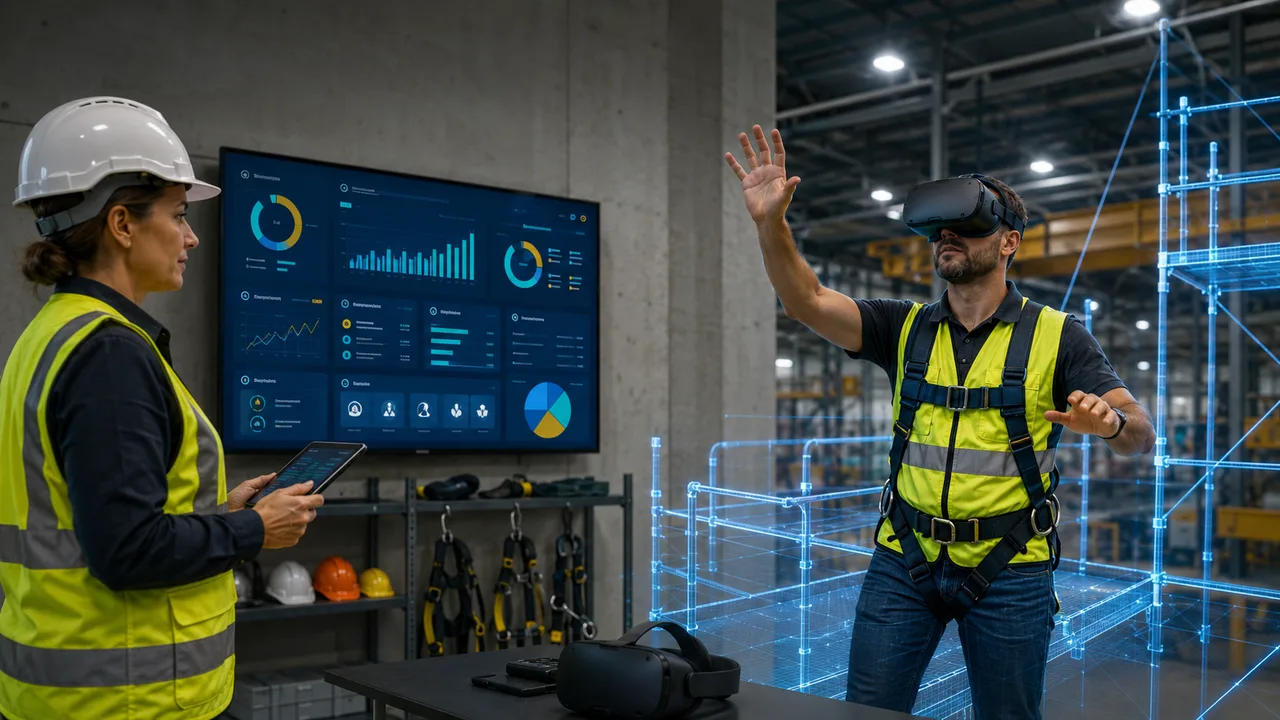
The providers above are strong for compliance content, credentialing, and LMS tracking. The Prime VR represents the immersive frontier: custom virtual reality programs where workers practice the highest-risk scenarios, falls, forklift operation, confined space, hazmat, lockout/tagout, arc flash, inside a replica of their actual facility, with a simulated consequence for error instead of a real one. It does not replace your compliance program, it strengthens the practical-training and evaluation components that change behavior.
For safety leaders whose workers "passed the course but still take the shortcut," immersive practice is the layer that builds real habits. Learn more about VR safety and operations training.
Frequently Asked Questions
What is the best workplace safety training company?+
It depends on your need. The National Safety Council and NASP are strong for standards-based content and on-site or credentialed training, ClickSafety and 360training lead for online OSHA courses at scale, and Coggno and NAVEX suit teams that want safety training inside an LMS or GRC platform. For high-risk, hands-on work where watching a video does not build real judgment, immersive VR safety training is the complement that lets workers practice dangerous scenarios safely, covered below.
How much does workplace safety training cost?+
Online safety courses run from a few dollars to low hundreds per worker, and enterprise LMS-based programs are priced per seat per year. Custom immersive VR safety training, built around your specific facility and hazards and owned rather than licensed per seat, typically ranges from $25,000 to $500,000 depending on the number of scenarios and sites.
Does VR safety training meet OSHA requirements?+
OSHA standards generally require formal instruction, practical training, and an evaluation. VR safety training strongly supports the practical-training and evaluation components because workers perform the tasks and the system logs per-worker performance, and it is typically paired with the required hands-on or written elements. Employers should confirm their specific certification process, but simulation provides documented practical practice that strengthens the overall program.
When is VR safety training worth it over online courses?+
VR safety training is worth it when the risk is physical and spatial: falls, forklift and heavy-equipment operation, confined space, hazmat, lockout/tagout, arc flash. These are exactly the scenarios too dangerous to stage in real life, so traditional training can only describe them. VR lets workers experience the consequence of a mistake safely, building anticipatory habits that transfer to the floor.
Train the hazards too dangerous to stage for real
We build custom VR safety training on your actual facility and top incident categories. Tell us your hazards and we will scope it.