
Best Corporate Onboarding Programs (2026)
The first weeks decide whether a new hire becomes productive and stays. Corporate onboarding platforms combine the paperwork and process with the training and connection that turn a new employee into a contributor. These are the leading options.
QUICK ANSWER
The best corporate onboarding platforms include Trainual, WorkRamp, Enboarder, Talmundo, Click Boarding, and BambooHR. They range from process documentation and role training to experience-driven onboarding journeys, and the right pick depends on whether your priority is role readiness or new-hire experience and retention.
How to read this list
Onboarding platforms split between role-readiness training and experience-and-process automation. Match the pick to whether you most need new hires trained to their role or guided through a smooth, engaging first-weeks journey.
The Platforms
Trainual
Best for: Role and process onboarding
Turns how your company works into assignable onboarding, so new hires learn their role and your processes from day one.
WorkRamp
Best for: Role readiness and enablement
A learning platform used to onboard and ramp employees with structured, trackable role training.
Enboarder
Best for: New-hire experience and journeys
Focuses on the human side of onboarding with guided, experience-driven journeys that improve engagement and retention.
Talmundo
Best for: Structured preboarding and onboarding
A dedicated onboarding platform covering preboarding through the first months with a strong new-hire experience.
Click Boarding
Best for: Compliant onboarding workflows
Automates the process and compliance side of onboarding with configurable new-hire workflows.
BambooHR
Best for: Onboarding within HR
Pairs onboarding with core HR, useful for companies that want hiring, onboarding, and records in one system.
THE IMMERSIVE OPTION
Where custom VR fits corporate onboarding
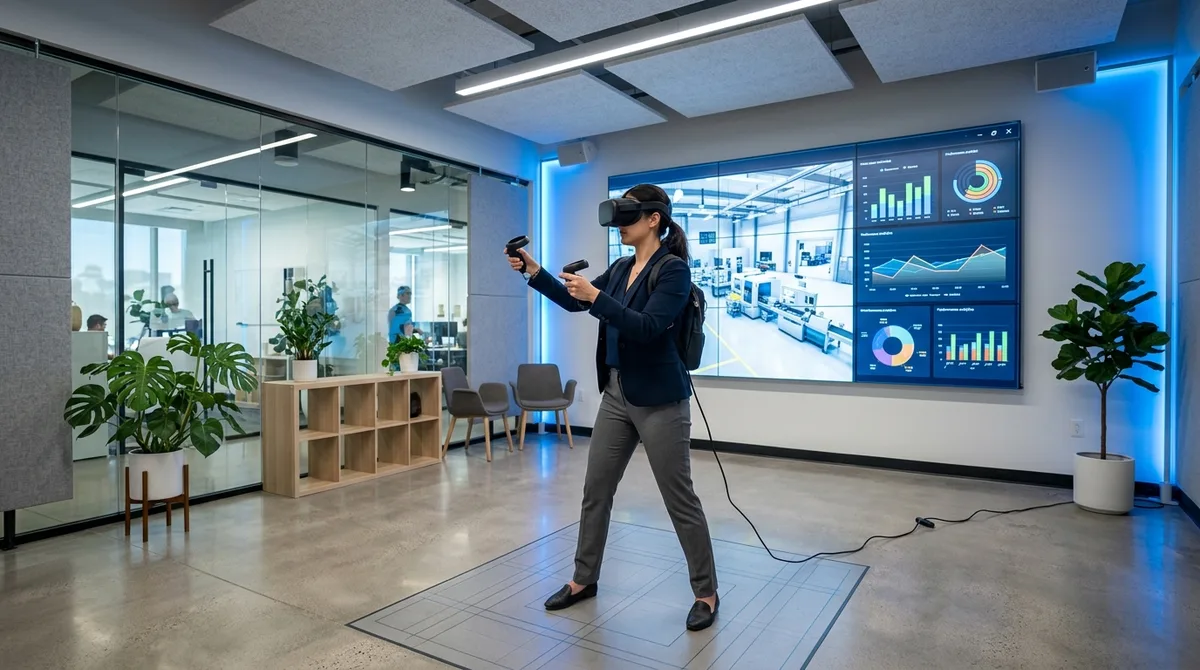
These platforms handle the process, the paperwork, and the role training. What they cannot do is let a new hire practice the actual hands-on or high-stakes parts of the job before day one on the floor. That practice layer is where immersive simulation fits.
The Prime VR builds custom VR onboarding for the specific procedures and scenarios a new hire must master, so they arrive on the floor having already practiced, with a performance record that plugs into your onboarding platform.
Pre-boarding and First Week
Contact before day one and structure the first week to reduce anxiety. Prepared equipment and schedules help.
Assign a buddy.
Compliance and Culture
Combine required training with culture and role expectations. Avoid overload.
Space content over time.
Measuring Success
Track time to productivity, retention and feedback. Use surveys at set intervals.
Iterate on results.
Comparing Platforms
Evaluate integrations, content authoring, reporting and ease of use. Involve HR and managers in the review.
Request a trial.
Managers Make It Real
Tools help, but the manager relationship drives early engagement. Provide checklists and coaching.
Check in regularly.
What Onboarding Is Supposed to Achieve
Onboarding covers the period from offer acceptance through the point at which a new employee is productive and integrated.
Its measurable objectives are time to productivity, early retention and the new hire understanding of role, expectations and organizational context.
Programs that consist of paperwork and a systems walkthrough address compliance and leave the objectives above untouched.
Criteria for Comparing Providers
Compare whether a provider delivers content, a platform, program design or all three, because organizations frequently buy one while needing another.
Ask how the program adapts to different roles, since a uniform experience serves neither a frontline hire nor a senior specialist well.
Ask what the provider measures and how, because a provider without an outcome measure is selling activity rather than results.
Questions to Ask
Ask how the program handles the period between offer acceptance and start date, which is when a meaningful share of new hires disengage.
Ask how manager involvement is structured, because manager behavior is consistently the strongest determinant of onboarding outcomes.
Ask how long the program runs, since programs concluding in the first week address orientation rather than onboarding.
Integration With Existing Systems
Consider how content will be maintained, who owns updates and what happens when a process the program describes changes.
Consider integration with the human resources and learning systems already in place, because duplicate records create work rather than removing it.
Consider whether the program can be delivered consistently across locations, shifts and remote arrangements.
Measuring Whether It Worked
Useful measures include ninety day and one year retention, time to defined productivity milestones, manager assessment and new hire feedback collected after the initial enthusiasm passes.
Completion rates measure participation rather than effect, and treating them as an outcome is a common error.
Comparing against the organization own prior data is more informative than comparing against published benchmarks from different contexts.
Where Practice Fits
Role specific practice on real tasks, with feedback, is what converts orientation into capability.
Simulation allows new hires to rehearse procedures, customer interactions and systems use before the consequences are real.
Employment law, required compliance training and record keeping obligations apply to onboarding and differ by jurisdiction and sector, so requirements should be confirmed independently.
Common Mistakes and How to Avoid Them
Common mistakes when selecting include buying content when the gap is program design, treating onboarding as a first week event, leaving managers without a defined role and measuring completion instead of outcomes.
Supervisors can help by making it acceptable to pause and ask. A culture where questions are treated as competence rather than weakness produces fewer errors in employee onboarding.
How Employers Evaluate Readiness
Organizations evaluate onboarding through early retention, time to productivity, manager assessment of readiness, new hire feedback and the consistency of the experience across locations.
Keeping Skills Current
Roles, systems and processes change. Assigning ownership for content maintenance prevents new hires being trained on procedures the organization no longer uses.
Planning and Preparation
Preparation includes defining what productive means for each role, identifying where current onboarding fails, deciding what will be measured and confirming what compliance content is legally required before evaluating providers.
Documentation That Holds Up
Records of completion for required compliance content, measured time to productivity and retention data by cohort are what allow an organization to judge a program and to meet its obligations.
Related Guides
These cover adjacent ground with a different focus:
- Corporate VR Training: Scale Enterprise Learning Programs
- Best Corporate Training Companies (2026): Compared
Frequently Asked Questions
What makes onboarding effective?+
A balance of process and people: efficient paperwork and compliance, clear role training, and a human experience that builds connection. Strong onboarding improves productivity and retention.
What is the difference between onboarding platforms?+
Some focus on role-readiness training, others on new-hire experience and journey automation, and some on compliance workflows. The best fit depends on your biggest onboarding gap.
How does VR improve onboarding?+
VR lets new hires practice the hands-on or high-stakes parts of the job before their first real shift, so they arrive more capable and confident than paperwork and videos alone allow.
What is pre-boarding?+
Engagement with new hires between offer acceptance and start date.
How long should onboarding last?+
Often several months, with structured touchpoints beyond the first week.
Get new hires floor-ready before day one.
We build custom VR onboarding for the procedures that matter.
VR scenario designs related to this topic
Proposed practice scenarios and checklist guides built around specific tasks. Each one lists what VR does not replace.
Request a scenario mockup