
Mobile Crane Lifts VR Training for Manama Construction Crews
Practise mobile crane lifts decisions in Manama with custom VR: spot changed conditions, stop unsafe work and verify controls.
QUICK ANSWER
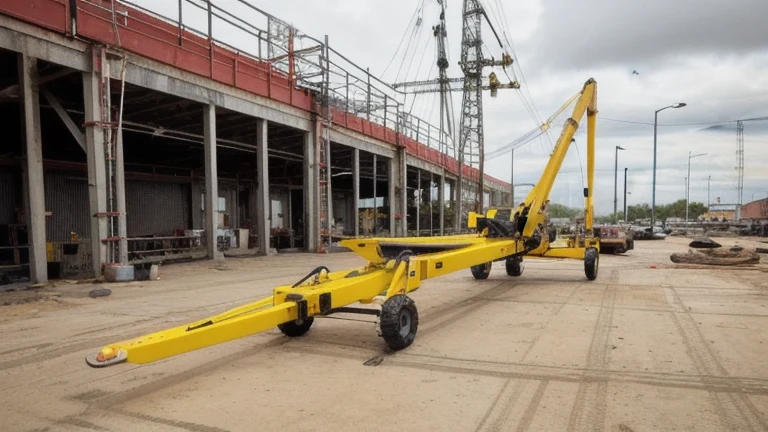
A custom VR exercise helps Manama construction crews practise setting up a mobile crane beside temporary works and explain when the work must stop. At the office tower roof equipment installation, the crane setup shifts towards an undocumented chamber. The trainee examines the ground assessment, outrigger layout and approved lift configuration, identifies the affected people and requests evidence before release.
What the Rule Requires
Bahrain Labour Law No. 36 of 2012 for the Private Sector: Use the cited Bahrain private sector Labour Law as a starting reference when reviewing mobile crane lifts for the office tower roof equipment installation. Relate the ground assessment, outrigger layout and approved lift configuration to the approved work method and retain the review of the verified support at the final crane position, without presenting the virtual record as a permit or certification. The employer must confirm current requirements with the regulator and the operator for the Manama office tower roof equipment installation.
At the fictional Manama office tower roof equipment installation, the crane setup shifts towards an undocumented chamber. Another demand competes for attention because the street-side delivery window pressures the team. The learner must report to the lift supervisor coordinating urban delivery access without losing control of the affected area. The restart discussion concerns the verified support at the final crane position, which remains subject to the Manama office tower roof equipment installation team's actual approval process.
What can go wrong with mobile crane lifts at this Manama site?
The Manama lesson takes place at a office tower roof equipment installation, with the crew facing the fact that the crane setup shifts towards an undocumented chamber. That creates a decision about the ground assessment, outrigger layout and approved lift configuration before work can continue. The possible consequence is loss of crane stability on unsuitable support, even if the surrounding activity appears controlled. Meanwhile, the street-side delivery window pressures the team, which makes a shortcut sound attractive. The point of setting up a mobile crane beside temporary works is to catch the change while it can still be managed. A cue such as an outrigger position over an undocumented buried chamber should support that judgement without turning the scene into a search for brightly marked hazards.
At this Manama work front, the expected response is to suspend setup until the lifting team verifies ground support. The learner should give the lift supervisor coordinating urban delivery access enough detail to understand the hold and request the verified support at the final crane position before release. The office tower roof equipment installation may pass between trades, so an unresolved issue needs a clear handover rather than an assumption that someone else owns it. Use assuming a paved surface proves adequate bearing capacity as the main debrief question for this task. In mobile crane lifts, the trainee should explain why a convenient workaround is unacceptable and which part of the decision requires a competent person's review beyond their own authority.
How is the Manama mobile crane lifts scenario built and assessed?
For the Manama module, The Prime VR maps setting up a mobile crane beside temporary works into a small set of decisions agreed with the employer. Reproduce the office tower roof equipment installation features needed to judge access, communication and release, then introduce the point where the crane setup shifts towards an undocumented chamber. The learner should be able to inspect the ground assessment, outrigger layout and approved lift configuration, raise a concern and ask for the missing evidence. Review the branch involving the verified support at the final crane position with the person who actually accepts that record on site. Have the lift supervisor coordinating urban delivery access test the dialogue before cohort use.
Assess this Manama exercise against approved support conditions matched to the actual crane configuration, with critical decisions defined before the first learner begins. At the office tower roof equipment installation, capture what the participant noticed and why they accepted or rejected the instruction. Record hints and coaching explicitly. A repeat attempt should vary a meaningful cue so the learner must reconsider the ground assessment, outrigger layout and approved lift configuration. Keep the result distinct from ground engineering and machine-specific capacity calculations, which cannot be established by simulated choices alone, and arrange an appropriate physical assessment of machine operation, rigging exercises and competent lift planning through the employer's normal training system.
Who needs mobile crane lifts practice in Bahrain, and when should they repeat it?
Select lift supervisors, crane operators and ground preparation teams for the Manama trial, including the people who receive reports as well as those performing the task. At the office tower roof equipment installation, their shared understanding of the verified support at the final crane position matters when one trade hands an area to another. Ask each learner to explain an outrigger position over an undocumented buried chamber independently after a short controller familiarisation. The employer should retain machine operation, rigging exercises and competent lift planning as a separate requirement and tell the receiving supervisor what was demonstrated, what needed coaching and what still needs checking on the actual work face.
Refresher timing for the Manama office tower roof equipment installation should be an employer decision based on task changes and observed understanding. The lesson may need review after a revised crane position, radius or ground condition, especially if the new arrangement makes an old answer unsafe. Ask the lift supervisor coordinating urban delivery access to check that the ground assessment, outrigger layout and approved lift configuration still matches the approved method before repeating the module. The rehearsal for mobile crane lifts does not replace certification, permits or hands-on training. For the Manama office tower roof equipment installation, the review should resolve this question: which move invalidates the old plan.
How would a mobile crane lifts pilot run at the office tower roof equipment installation?
The scoping call for a Manama pilot should settle why setting up a mobile crane beside temporary works is the right first decision to rehearse at the office tower roof equipment installation. Supply the approved procedure and examples of the verified support at the final crane position, removing information unnecessary for training. Ask the lift supervisor coordinating urban delivery access to challenge the mockup against the actual work method. For the Manama office tower roof equipment installation, the review should resolve this question: which lift configuration defines scope. Ask the lift supervisor coordinating urban delivery access to explain how the verified support at the final crane position relates to this Manama decision.
At the end of the Manama pilot, compare the observed decisions with the employer's existing instruction for mobile crane lifts. For the office tower roof equipment installation, the useful question is whether learners explain why the crane setup shifts towards an undocumented chamber and choose the correct next step without help. Review their requests for the verified support at the final crane position and the clarity of the handover to the responsible role. Let the lift supervisor coordinating urban delivery access distinguish confusing content from an impractical site procedure before revisions are approved. Keep ground engineering and machine-specific capacity calculations and the required physical practice visible in the outcome.
Hazards in This Scenario
- Outriggers over buried voids
- Unapproved lift radius changes
- Incomplete crane setup
- People entering the slewing area
The Procedure the Scenario Rehearses
- Match setup to the plan
- Check buried services and voids
- Verify approved ground support
- Confirm actual crane configuration
- Control slew and load zones
- Refer changes for lifting review
Mistakes the Scenario Is Built to Catch
- Setting pads over an unknown chamber
- Moving the crane without plan review
- Guessing the load weight
- Treating paving as a ground assessment
Competence Assessment Matrix
| Decision point | What the assessor sees | Pass standard |
|---|---|---|
| Ground | Undocumented cover below pad | Stop setup for verification |
| Plan | Radius differs from drawing | Require authorised review |
| Configuration | Setup does not match chart | Reject the lift configuration |
| Exclusion | Pedestrian enters slew zone | Stop movement and restore control |
What VR Covers
- Changed-condition rehearsal at the office tower roof equipment installation
- Inspection choices involving the ground assessment, outrigger layout and approved lift configuration
- Reporting practice with the lift supervisor coordinating urban delivery access
- Feedback linked to the verified support at the final crane position
What VR Does Not Replace
- Practical instruction in machine operation, rigging exercises and competent lift planning
- Competent decisions about ground engineering and machine-specific capacity calculations
- Real permits, certification and work authorisation for the office tower roof equipment installation
Scope of a One-Scenario Pilot
A pilot builds this scenario as a single module, in Unity or Unreal Engine depending on the visual fidelity the task needs and the headsets on site. It runs on standalone headsets, logs every learner decision, and exports a per-person record for your training file. It is measured against your current method with a test cohort before anything is scaled.
Frequently Asked Questions
What is the first decision in Manama mobile crane lifts training?
The Manama office tower roof equipment installation scene asks the learner to respond when the crane setup shifts towards an undocumented chamber. The useful first step is to check the ground assessment, outrigger layout and approved lift configuration and explain who may be exposed.
What practical work stays outside the Manama mobile crane lifts module?
At the office tower roof equipment installation, the employer still provides machine operation, rigging exercises and competent lift planning and checks the person's real responsibilities. Include the lift supervisor coordinating urban delivery access when defining those limits, and ensure a completion record cannot be mistaken for the required work authorisation or practical assessment.
Which inputs are useful when scoping Manama mobile crane lifts?
Prepare the office tower roof equipment installation work sequence, layout and relevant examples of the verified support at the final crane position for scoping. Include the fact that the street-side delivery window pressures the team, since that makes the decision credible.
What could trigger a refresher for Manama mobile crane lifts?
A review may be appropriate after a revised crane position, radius or ground condition, with the employer deciding what the Manama crew needs next. At the office tower roof equipment installation, supervisor observations can justify focused coaching before a planned refresher date.
How is language understanding checked for Manama mobile crane lifts?
Check the words used for the ground assessment, outrigger layout and approved lift configuration with workers assigned to the office tower roof equipment installation. Ask the lift supervisor coordinating urban delivery access to review local terminology, then assess each learner's understanding independently so a colleague's explanation does not hide an unresolved language barrier.
What does the 48-hour mockup offer mean for Manama mobile crane lifts?
The Prime VR offers a mockup of the office tower roof equipment installation scenario within 48 hours after a scoping call. Use that concept to review the learner's choices and the request for the verified support at the final crane position.
Running this scenario across several sites or contractors?
We review your current procedure and tell you which parts can be rehearsed in VR and which still need hands-on practice.
Plan a Multi-Site PilotFurther reading
- Work at Height VR Training for Manama Construction Crews
- Guardrails and Edge Protection VR Training for Manama Construction Crews
- Scaffold Erection and Inspection VR Training for Manama Construction Crews
- Mobile Scaffold Towers VR Training for Manama Construction Crews
- Mobile Crane Lifts
- Construction safety training programs
- All VR training scenarios: Bahrain
- VR pilot readiness checklist
- How VR training programs are priced