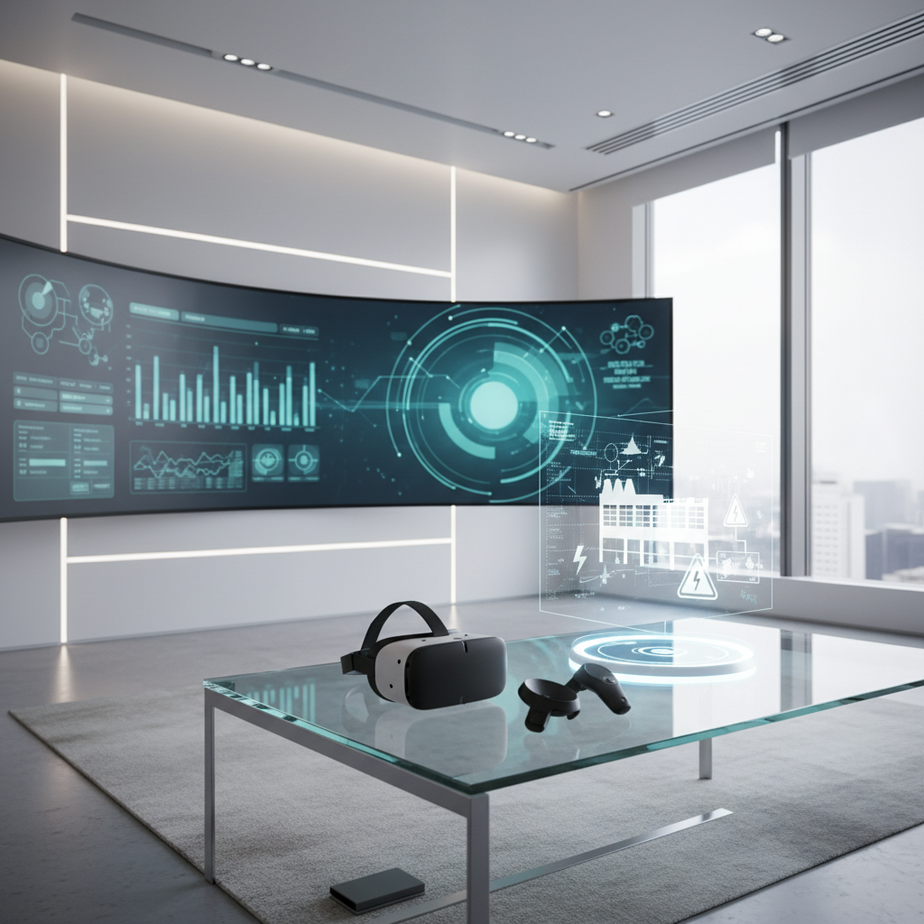
VR Hazard Recognition Training: Complete Guide 2025
VR hazard recognition training uses virtual reality simulations to teach employees to identify and respond to workplace dangers in safe, controlled environments. Entry-level programs start at $50,000, delivering 50% cost reductions compared to traditional training methods.
Key Takeaways
- Cost-Effective: VR training delivers 50% cost reduction over traditional methods with entry-level programs starting at $50,000
- Enhanced Safety: Immersive simulations improve situational awareness and hazard recognition skills from day one
- Risk-Free Learning: Employees practice dangerous scenarios safely without exposure to real workplace hazards
- Higher Retention: Interactive VR training significantly improves knowledge retention compared to classroom-based safety programs
- Scalable Solution: Custom modules can be deployed across multiple locations and training scenarios nationwide
Workplace accidents cost U.S. businesses billions annually, with many incidents stemming from inadequate hazard recognition training. Traditional safety programs often fail to prepare employees for real-world dangers, relying on outdated methods that lack engagement and practical application. This disconnect between training and reality leaves workers vulnerable when they encounter actual hazards on the job.
Virtual reality hazard recognition training is revolutionizing workplace safety by immersing employees in realistic, high-risk scenarios without physical danger. This innovative approach allows workers to experience and respond to hazardous situations repeatedly, building critical recognition skills and muscle memory that transfers directly to their work environment. Companies implementing VR safety training report significant improvements in hazard identification, faster emergency response times, and measurable reductions in workplace incidents.
This comprehensive guide explores how VR hazard recognition training transforms traditional safety programs, delivering superior outcomes while reducing long-term training costs. We’ll examine implementation strategies, cost considerations, and proven methodologies that help organizations create safer workplaces through immersive technology.
What is VR Hazard Recognition Training
VR hazard recognition training is an immersive educational technology that uses virtual reality environments to teach workers how to identify, assess, and respond to workplace dangers. Unlike traditional classroom-based safety training, this technology places employees directly into realistic, three-dimensional scenarios where they can practice recognizing hazards without exposure to actual risk.
The core principle behind VR hazard recognition training lies in experiential learning. Trainees wear VR headsets that transport them into meticulously crafted virtual environments that mirror their actual work settings. These simulations can range from construction sites with falling objects and unstable structures to manufacturing floors with moving machinery and chemical hazards. The immersive nature allows workers to develop critical situational awareness skills that translate directly to real-world safety performance.
What sets VR hazard recognition training apart from conventional methods is its ability to create repeatable, controlled scenarios that would be impossible or dangerous to recreate in reality. For instance, oil and gas workers can experience emergency pipeline situations, warehouse employees can navigate forklift accidents, and construction crews can practice responding to equipment failures—all within a safe, virtual environment that provides immediate feedback and learning opportunities.
The technology integrates sophisticated tracking systems that monitor user behavior, eye movement, and decision-making patterns. This data collection capability enables trainers to identify knowledge gaps and provide personalized coaching, making the learning experience more effective than traditional lecture-based approaches. Modern VR hazard recognition platforms also incorporate gamification elements, scoring systems, and progress tracking to maintain engagement and measure competency development over time.
Benefits of VR Hazard Recognition Training for Industrial Safety
The implementation of VR hazard recognition training delivers measurable returns on investment through reduced workplace incidents, lower insurance premiums, and decreased training costs. Organizations report up to 50% cost reduction from long-term VR use compared to traditional training methods, primarily due to eliminated travel expenses, reduced instructor time, and the ability to train multiple employees simultaneously without physical space constraints.
Enhanced learning retention represents another significant advantage. Traditional safety training typically achieves 10-20% retention rates after 30 days, while VR-based hazard recognition training demonstrates retention rates exceeding 75%. This dramatic improvement stems from the immersive, hands-on nature of virtual experiences that engage multiple senses and create memorable learning moments. Employees who practice hazard identification in realistic VR scenarios develop muscle memory and instinctive responses that activate during actual dangerous situations.
Risk elimination during training constitutes perhaps the most valuable benefit. VR hazard recognition training allows organizations to expose workers to high-risk scenarios without physical danger. Employees can experience electrical hazards, chemical spills, equipment malfunctions, and emergency evacuations repeatedly until they master appropriate responses. This capability is particularly valuable for industries where mistakes during traditional training could result in serious injuries or fatalities.
The scalability and consistency of VR training programs provide operational advantages that traditional methods cannot match. Once developed, VR hazard recognition modules can train unlimited employees with identical content quality, ensuring standardized safety knowledge across entire organizations. This consistency proves especially valuable for companies with multiple locations or those experiencing rapid workforce expansion, where maintaining uniform safety standards becomes challenging through conventional training approaches.
How VR Hazard Recognition Training Works
The VR hazard recognition training process begins with comprehensive workplace assessment and scenario development. Safety experts collaborate with VR developers to create accurate virtual replicas of actual work environments, incorporating specific hazards, equipment, and procedures relevant to each organization. This customization ensures that training scenarios directly align with real workplace conditions and regulatory requirements.
During training sessions, employees don VR headsets and enter immersive simulations that present various hazard scenarios. The system tracks user movements, gaze patterns, and decision-making responses through advanced sensors and analytics. As trainees navigate virtual environments, they encounter realistic hazards such as improperly stored chemicals, damaged equipment, or unsafe work practices. The simulation reinforces situational awareness, hazard recognition, and response skills, empowering trainees to contribute to a safer workplace from day one.
Interactive elements within VR training modules require active participation rather than passive observation. Trainees must physically point out hazards, select appropriate personal protective equipment, follow safety protocols, and make critical decisions under time pressure. The system provides immediate feedback, explaining why certain choices are correct or incorrect and demonstrating proper procedures. This real-time coaching accelerates learning and helps cement proper safety behaviors.
Assessment and progress tracking form integral components of the VR training process. The technology captures detailed performance metrics, including reaction times, accuracy of hazard identification, and adherence to safety protocols. These analytics enable training managers to identify individual learning needs, track competency development, and generate compliance reports. Advanced platforms also support collaborative training scenarios where multiple users can practice emergency response procedures together, fostering teamwork and communication skills essential for workplace safety. For organizations interested in exploring comprehensive VR training solutions, our blog provides detailed insights into implementation strategies and best practices.
VR Hazard Recognition Training Trends in the US Market
The United States VR training market is experiencing unprecedented growth, with hazard recognition applications leading adoption across manufacturing, construction, oil and gas, and logistics sectors. Industry analysts project the VR training market will expand at a compound annual growth rate exceeding 30% through 2025, driven primarily by regulatory compliance requirements and the proven ROI of immersive safety training programs.
Enterprise adoption patterns reveal that larger organizations are investing heavily in custom VR hazard recognition solutions, with entry-level projects starting at $50,000 for single-module implementations. However, the total cost of ownership decreases significantly as programs scale, making VR training increasingly attractive for companies with substantial workforce training needs. This economic reality is driving consolidation toward comprehensive platforms that can deliver multiple training modules across various safety domains.
Technological advancement trends are reshaping VR hazard recognition training capabilities. Artificial intelligence integration enables adaptive learning paths that adjust scenario difficulty based on individual performance, while haptic feedback systems provide tactile sensations that enhance realism. Cloud-based deployment models are becoming standard, allowing organizations to update content rapidly and ensure consistent training delivery across geographically distributed teams.
Regulatory influence continues to shape market development, with OSHA and industry-specific safety organizations increasingly recognizing VR training as equivalent to traditional methods for compliance purposes. This regulatory acceptance is accelerating adoption among risk-averse industries that previously hesitated to embrace immersive training technologies. Additionally, insurance providers are beginning to offer premium discounts for organizations that implement comprehensive VR safety training programs, creating additional financial incentives for adoption. As the technology matures, we expect to see increased integration with existing learning management systems and greater emphasis on data analytics to demonstrate training effectiveness and regulatory compliance. Companies exploring these emerging trends can find valuable resources and expert guidance through our comprehensive training insights.
Common Mistakes to Avoid
Organizations implementing VR hazard recognition training often encounter preventable pitfalls that can undermine their investment and training effectiveness. Understanding these common mistakes helps ensure successful program deployment.
1. Using Inappropriate Content Creation Tools: Many companies select eLearning authoring tools that aren’t designed for immersive VR experiences. This leads to poorly optimized content that fails to leverage VR’s interactive capabilities and creates subpar training experiences.
2. Inadequate Scenario Realism: Developing VR simulations that don’t accurately reflect real workplace hazards significantly reduces training effectiveness. Generic scenarios fail to prepare employees for the specific dangers they’ll encounter in their actual work environment.
3. Insufficient Repetition and Practice: Traditional training often lacks adequate repetition opportunities due to cost and safety constraints. VR training programs that don’t incorporate sufficient practice sessions miss the opportunity to build muscle memory and automatic hazard recognition responses.
4. Ignoring User Comfort and Safety: Failing to implement proper VR safety protocols can trigger stress, anxiety, or motion sickness in trainees. This is particularly critical when training scenarios involve high-stakes situations or hazardous environments that could cause psychological distress.
5. Lack of Measurable Goals and Assessment: Implementing VR training without clear learning objectives and assessment metrics makes it impossible to measure ROI or training effectiveness. Successful programs establish specific, measurable goals before deployment and track progress throughout the training process.
Frequently Asked Questions
What can VR training help employees avoid?
VR hazard recognition training helps employees avoid workplace accidents, injuries, and safety violations by allowing them to experience dangerous scenarios safely. It eliminates the risks associated with learning on actual equipment and in hazardous environments while building critical safety skills.
What are some issues or problems with virtual reality training?
Common VR training challenges include motion sickness, technical difficulties, high initial costs, and the need for specialized equipment maintenance. Some users may experience anxiety in immersive scenarios, and organizations must ensure proper content quality to avoid ineffective training outcomes.
What is the 20-20-20 rule for VR?
The 20-20-20 rule suggests taking a 20-second break every 20 minutes to look at something 20 feet away. This helps reduce eye strain and fatigue during extended VR training sessions, ensuring user comfort and maintaining training effectiveness.
How much does VR hazard recognition training cost?
VR training costs vary significantly based on complexity and customization requirements. Entry-level, single-module projects typically start around $50,000, while comprehensive custom training programs can cost significantly more depending on specific industry requirements and features.
How long does it take to implement VR hazard recognition training?
Implementation timelines depend on program complexity and customization needs. Off-the-shelf solutions can be deployed within weeks, while custom VR training modules typically require 3-6 months for development, testing, and full deployment across an organization.
What industries benefit most from VR hazard recognition training?
High-risk industries including oil and gas, construction, manufacturing, warehousing, and chemical processing see the greatest benefits from VR hazard recognition training. These sectors have inherent safety risks that make immersive, risk-free training particularly valuable for employee safety and regulatory compliance.
Conclusion
VR hazard recognition training represents a transformative approach to workplace safety education, offering unprecedented opportunities to prepare employees for real-world dangers without exposing them to actual risk. The technology’s ability to create immersive, repeatable training scenarios while providing detailed performance analytics makes it an invaluable tool for modern safety programs.
Organizations implementing VR hazard recognition training can expect significant improvements in safety outcomes, reduced training costs over time, and enhanced employee engagement. The technology’s scalability and consistency ensure that every employee receives the same high-quality training experience, regardless of location or timing constraints.
Success with VR training requires careful planning, appropriate content development, and ongoing program optimization. Companies that avoid common implementation mistakes and focus on measurable outcomes will see the greatest return on their VR training investment.
Ready to transform your organization’s safety training program? The Prime VR specializes in developing custom VR hazard recognition training solutions tailored to your industry’s specific challenges and requirements. Our team of experts will work with you to create immersive training experiences that deliver measurable safety improvements and strong ROI. Schedule a Demo today to discover how VR technology can revolutionize your workplace safety training and protect your most valuable asset – your employees.
Deja un comentario